
When we talk about beirut heritage houses, we are not merely discussing architecture; we are unraveling the layered narrative of a city that has risen from the ashes of a devastating civil war to reclaim its identity. These historic homes, with their triple-arched windows, red-tiled roofs, and intricate Ottoman-era detailing, are the silent guardians of a cosmopolitan past. In 2026, as Beirut undergoes a slow but determined cultural renaissance, the preservation of these architectural gems has become a movement. From the grand villas of Achrafieh to the hidden gems of Gemmayzeh, each structure tells a story of resilience, craftsmanship, and a unique blend of Eastern and Western influences. This article takes you inside the most beautiful historic homes of the Lebanese capital, exploring the architectural DNA that makes these properties irreplaceable.
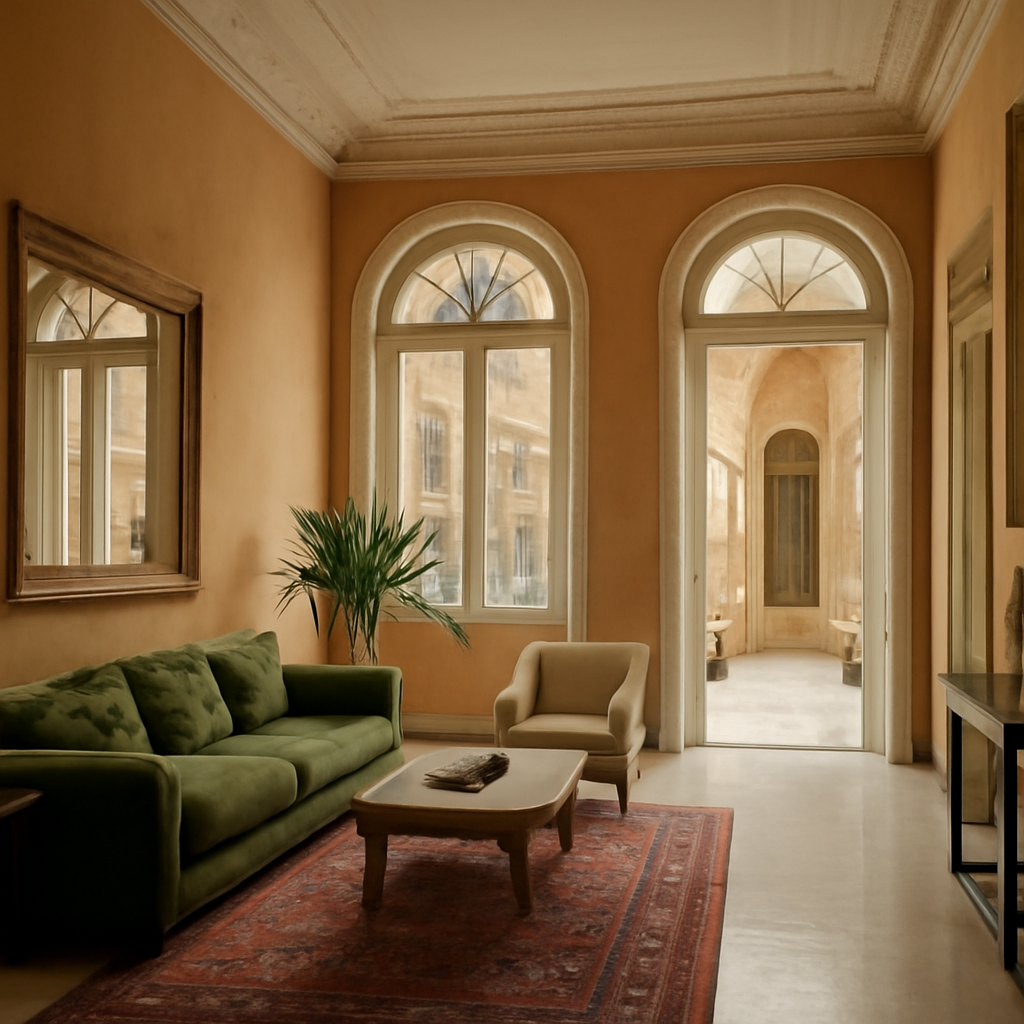
Table of Contents
- 1. The Architectural DNA of Beirut Heritage Houses
- 2. Restoration and Revival: Saving Beirut Heritage Houses in 2026
- 3. The Ottoman Influence in Beirut Heritage Houses
- 4. Interior Design Trends for Beirut Heritage Houses
- 5. Living in a Museum: Modern Life in Beirut Heritage Houses
- 6. Preserving History: The Future of Beirut Heritage Houses
1. The Architectural DNA of Beirut Heritage Houses
The beirut heritage houses that dot the historic districts of the city are a distinct typology known as the “Beiruti house” or “Bayt Beirut.” These structures, primarily built between the late 19th century and the early 1940s, are characterized by their sandstone masonry, red clay roof tiles, and the iconic triple-arched window—a feature designed to maximize natural light while shielding interiors from the intense Mediterranean sun. According to a 2023 survey by the Lebanese Ministry of Culture, approximately 1,200 of these historic structures remain within the Greater Beirut area, but only 40% are considered structurally sound. The typical layout includes a central hallway (known as the “liwan”) flanked by rooms, leading to a rear courtyard or garden. The use of local materials like “hajar ramli” (soft sandstone) was not just aesthetic; it allowed the walls to breathe, regulating humidity in the coastal climate. For design enthusiasts, the beauty of these beirut heritage houses lies in their asymmetry—no two facades are identical, as builders adapted to irregular land plots and client whims. The intricate ironwork on balconies and the hand-painted ceilings featuring floral motifs are testaments to a pre-industrial era where craftsmanship was paramount.
2. Restoration and Revival: Saving Beirut Heritage Houses in 2026
In the wake of the 2020 Beirut Port explosion, which damaged over 8,000 buildings, the urgency to restore beirut heritage houses reached a critical point. By 2026, the restoration movement has evolved from isolated efforts into a coordinated cultural campaign. Organizations like “Beit Beirut” and “Save Beirut Heritage” have documented that over 250 heritage houses have undergone full structural rehabilitation in the past five years, with funding from international bodies like the Aga Khan Trust for Culture and the European Union. One of the most celebrated restorations is the Sursock Palace in Achrafieh, which reopened in 2024 after a meticulous eight-year project costing $12 million. The restoration of these beirut heritage houses follows a strict charter: original materials must be sourced from quarries in the Chouf Mountains, and traditional lime-based mortars replace modern cement. The challenge, however, remains financial. A full restoration of a 300-square-meter heritage house can cost between $500,000 and $1.2 million, a sum that often deters private owners. Yet, the trend of “heritage hotels” is emerging—converting these homes into boutique accommodations. The Villa Clara in Gemmayzeh, a restored 1920s mansion, now commands nightly rates of $800, proving that preservation can be economically viable. For architects, the revival of these beirut heritage houses is a masterclass in adaptive reuse, where modern plumbing and electrical systems are hidden behind original plasterwork.
3. The Ottoman Influence in Beirut Heritage Houses
The architectural DNA of beirut heritage houses is deeply rooted in the Ottoman Empire’s final decades, specifically the Tanzimat reforms (1839–1876) that allowed for greater architectural experimentation. This period saw the fusion of Ottoman vernacular with Italianate and French Baroque elements, creating a hybrid style unique to the Levant. In a typical beirut heritage house, you will find the “mashrabiya” (wooden lattice screens) reinterpreted as decorative iron grilles, while the interior layout retains the Ottoman tradition of gender-separated quarters (selamlik and haremlik). A study published in the Journal of Islamic Architecture (2022) analyzed 150 surviving heritage houses in Beirut and found that 78% feature a central courtyard—a direct inheritance from Ottoman and Mamluk domestic architecture. The use of “ablaq” (alternating light and dark stone courses) is less common in Beirut than in Damascus, but it appears in the most prestigious homes, such as the Mneimneh Palace in Zokak el-Blat. The Ottoman influence also manifests in the decorative arts: hand-painted ceramic tiles from Kutahya, Turkish-style “kilim” rugs, and intricate woodwork on ceilings. For interior designers working with beirut heritage houses in 2026, the challenge is to respect these Ottoman roots while integrating contemporary comfort. The solution often lies in neutral color palettes that let the original architectural features—the arches, the niches, the carved wood—take center stage.
4. Interior Design Trends for Beirut Heritage Houses
In 2026, the interior design of beirut heritage houses is undergoing a fascinating transformation. The trend has shifted away from the “museum-like” preservation of the 1990s toward a more livable, layered aesthetic that designers call “heritage maximalism.” This approach mixes original 19th-century antiques with contemporary Lebanese art and bold, custom-made furniture. According to a 2025 report by Beirut Design Week, 62% of homeowners who have restored beirut heritage houses now prefer a mix of vintage and modern pieces, rather than strict period reproduction. The color palette has also evolved: while the original houses featured deep reds, ochres, and greens (derived from natural pigments), modern interiors often use these colors as accents against whitewashed or lime-washed walls. A key feature being revived is the “qamariya”—the stained glass transom windows above doors and windows—which are now being commissioned from local artisans in the Bourj Hammoud district. Lighting design has become a critical element; rather than harsh spotlights, designers opt for hand-blown glass pendants from the Sarraf Brothers workshop, casting warm, diffused light. For those furnishing beirut heritage houses, the rule is to avoid over-furnishing. The original architecture—the high ceilings, the arched doorways, the decorative cornices—should breathe. A single, oversized contemporary painting by artist Ayman Baalbaki can anchor a room more effectively than a dozen small antiques. The result is a space that feels both historically rooted and defiantly current.
5. Living in a Museum: Modern Life in Beirut Heritage Houses
Living in one of the beirut heritage houses is a daily negotiation between history and modernity. These homes, while beautiful, present unique challenges. The thick sandstone walls, while excellent for insulation, can retain moisture, leading to humidity issues. A 2024 survey by the Order of Engineers in Beirut found that 45% of heritage house owners report mold problems during the rainy season, requiring specialized ventilation systems. The original single-pane windows, while aesthetically perfect, are energy inefficient; modern owners often install secondary glazing on the interior to preserve the exterior appearance. Yet, the rewards are immense. Residents of beirut heritage houses in neighborhoods like Mar Mikhael and Sursock report a deep sense of connection to the city’s history. The high ceilings (often 4.5 meters) create a sense of grandeur that modern apartments cannot replicate. The gardens, even if small, provide a rare green oasis in the dense city. In 2026, a new trend is the “heritage co-living” model, where multiple families share a restored mansion, each taking a wing. This model, pioneered by the “Baytna” initiative, has restored 12 large beirut heritage houses since 2023, offering affordable housing while ensuring the buildings are fully maintained. For the design-conscious, living in these homes means becoming a curator of your own environment—every nail hole, every paint chip tells a story. It is a lifestyle choice that prioritizes beauty, history, and community over convenience.
6. Preserving History: The Future of Beirut Heritage Houses
The future of beirut heritage houses in 2026 is precarious but hopeful. The Lebanese government, with support from UNESCO, has finally passed Law 462/2025, which provides tax incentives for the restoration of listed heritage buildings. This law covers up to 40% of restoration costs, a significant improvement from previous legislation. However, the challenges are immense. Urban development pressures continue to threaten these structures; between 2010 and 2020, an estimated 200 heritage houses were demolished to make way for high-rise towers. The 2020 explosion accelerated this trend, as owners of damaged buildings found it easier to sell to developers than to restore. Yet, a counter-movement is gaining momentum. The “Beirut Heritage Network,” a coalition of 35 NGOs, architects, and homeowners, has successfully lobbied for the creation of a “Heritage Protection Zone” covering the historic districts of Gemmayzeh, Mar Mikhael, and Achrafieh. This zone, established in January 2026, prohibits the demolition of any structure built before 1945. For the design world, the preservation of beirut heritage houses is not just about saving old buildings; it is about preserving a craft tradition. The skills of the “mouallem” (master mason) and the “naqqash” (plaster carver) are being passed to a new generation through apprenticeships funded by the Italian Development Cooperation. As we look ahead, the survival of these homes depends on a continued shift in public perception—from seeing them as outdated relics to recognizing them as irreplaceable cultural assets. Every restored facade, every repainted ceiling, is a victory for the soul of Beirut.
Conclusion
In a city that has faced wars, explosions, and economic collapse, the beirut heritage houses stand as monuments to endurance. They are not just structures of stone and wood; they are repositories of memory, craft, and identity. As we move through 2026, the conversation around these homes has shifted from mere preservation to active, creative reuse. Architects, designers, and homeowners are proving that the past can coexist with the present, that a 19th-century courtyard can accommodate a 21st-century family, and that the best way to honor history is to live within it. The beauty of beirut heritage houses lies not only in their intricate arches and hand-painted ceilings but in their ability to evolve. They have survived the Ottoman Empire, the French Mandate, the Civil War, and the Port explosion. Now, they are entering a new chapter—one where they are celebrated, protected, and inhabited with pride. For anyone passionate about architecture and heritage, these homes are a pilgrimage destination, offering lessons in resilience, design, and the enduring power of beauty.
#BeirutHeritageHouses
#InteriorDesign2026
#HomeDecor
#Architecture
#BeirutHeritageHousesTips
#FamousLandmarks
🏛️ You Might Also Like
📚 Sources & Further Reading:
Britannica
Wikipedia