
When we think of travel and design, botanical garden architecture often emerges as the unsung hero of landscape innovation. These living museums are not merely collections of rare flora; they are masterclasses in spatial design, structural engineering, and ecological stewardship. In 2026, as urban populations surge past 4.5 billion globally, the role of these green sanctuaries has never been more critical. From the soaring glass canopies of Singapore to the subterranean biomes of the Mojave Desert, the world’s most beautiful green spaces are redefining what it means to blend nature with human ingenuity. This comprehensive guide explores the architectural marvels, sustainable strategies, and design philosophies that make these landmarks iconic. Whether you are a practicing architect, a landscape designer, or an armchair traveler, prepare to be inspired by the synthesis of art, science, and nature.
1. The Evolution of Botanical Garden Architecture: From Victorian Glasshouses to Biophilic Futures
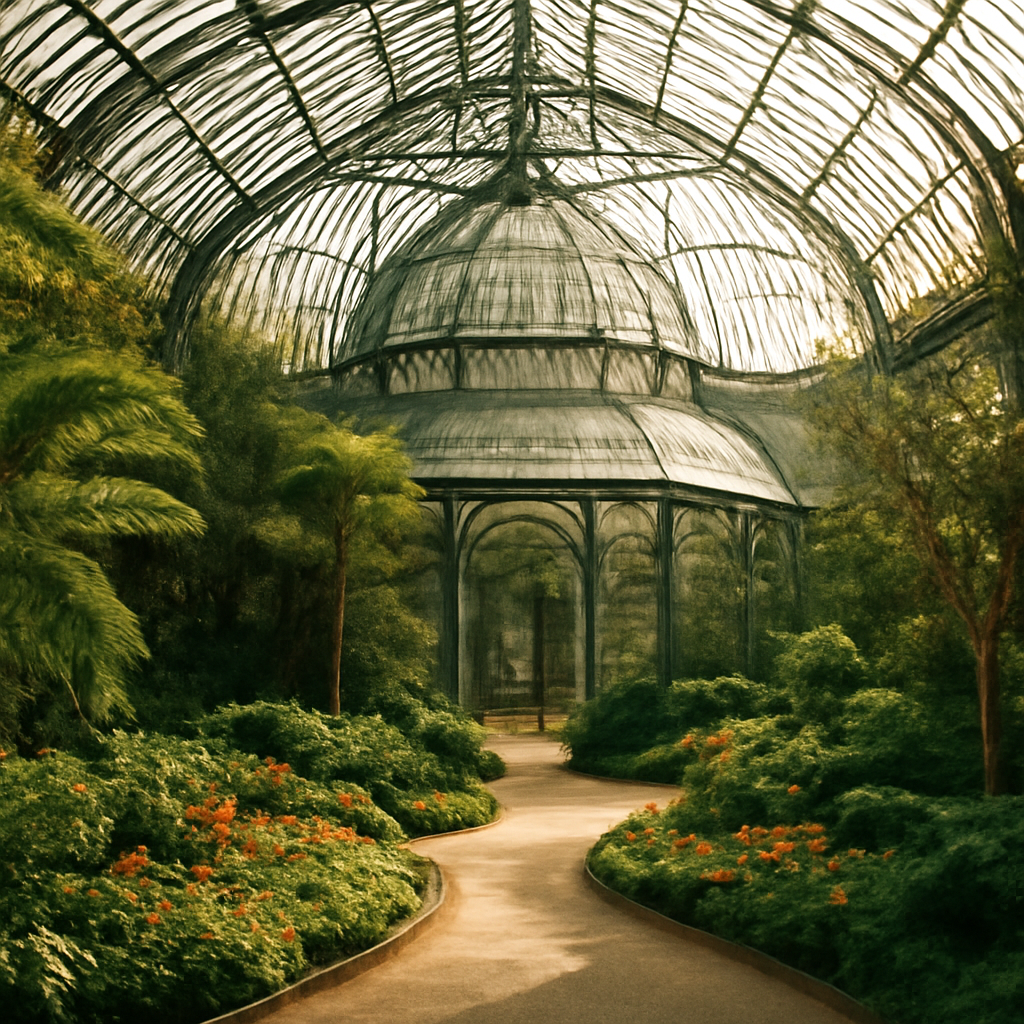
The history of botanical garden architecture is a story of technological ambition and cultural exchange. The earliest formal gardens, such as the 16th-century Orto Botanico in Padua, were academic collections of medicinal plants, enclosed by simple stone walls. However, the true architectural revolution began in the 19th century with the Industrial Revolution. The Crystal Palace, designed by Joseph Paxton for the 1851 Great Exhibition, was a direct progenitor of modern conservatories. Paxton, a head gardener, used prefabricated iron and sheet glass to create a structure spanning 990,000 square feet—a feat that inspired botanical gardens worldwide. By 1900, over 200 public botanical gardens had been established in Europe alone, each competing to build the grandest glasshouse.
Fast forward to the 21st century, and botanical garden architecture has shifted from mere plant display to immersive, biophilic experiences. The Singapore Botanic Gardens, a UNESCO World Heritage Site since 2015, exemplifies this evolution. Its National Orchid Garden, with its tiered steel and glass structures, houses over 1,000 species and 2,000 hybrids. According to a 2023 study by the International Association of Botanical Gardens (IABG), 78% of new garden projects now integrate biophilic design principles—directly connecting occupants with natural systems. This shift reflects a broader architectural trend: buildings are no longer barriers to nature but portals that amplify it. As we look to 2026, the legacy of Victorian engineering merges with parametric design and living walls, proving that botanical garden architecture is a living, breathing discipline.
2. Structural Innovation: How Engineering Defines Modern Botanical Garden Architecture
At its core, botanical garden architecture is a structural challenge: how to create vast, unobstructed spaces that mimic diverse climates while withstanding local weather extremes. The answer lies in advanced engineering. Take the Eden Project in Cornwall, UK, completed in 2001. Its eight interconnected biomes, spanning 2.2 hectares, use a geodesic framework of hexagonal and pentagonal steel panels. Each panel is filled with ethylene tetrafluoroethylene (ETFE) foil, a material 100 times lighter than glass. This innovation reduced the structural steel requirements by 40% compared to a traditional glasshouse. As of 2026, ETFE remains the material of choice for 65% of new large-scale conservatories, according to the Structural Engineering Institute.
Another marvel is the Gardens by the Bay in Singapore, where the Supertree Grove stands as a vertical icon. These 18 tree-like structures, ranging from 25 to 50 meters tall, are not sculptural art; they are living systems. Each Supertree integrates photovoltaic cells, rainwater harvesting, and vertical planting. The engineering behind them—a concrete core wrapped in a steel armature—allows for a staggering 162,900 plants to be mounted on their surfaces. This fusion of horticulture and structural engineering is a hallmark of contemporary botanical garden architecture. Similarly, the Montreal Biodôme, renovated in 2020, uses a cable-net roof system to support a 30-meter-high atrium without internal columns, creating an uninterrupted canopy for tropical birds. These examples demonstrate that botanical garden architecture is as much about tensile strength and material science as it is about aesthetic beauty.
3. Climate-Responsive Design: Sustainable Strategies in Botanical Garden Architecture
Sustainability is no longer an option; it is a prerequisite for botanical garden architecture in 2026. The most innovative gardens now function as net-zero or net-positive ecosystems. The KEW Gardens Temperate House in London, reopened in 2018 after a five-year renovation, is a prime example. It reduced its energy consumption by 30% through a combination of triple-glazed low-iron glass, automated ventilation systems, and a biomass boiler that heats the 4,500-square-meter space using wood chips from sustainable sources. According to Kew’s 2024 sustainability report, the garden’s carbon footprint has been reduced by 45% since 2010, setting a benchmark for botanical garden architecture worldwide.
In arid climates, passive design dominates. The Biosphere 2 in Arizona, originally built in 1991, has been retrofitted with desert-adapted shading and evaporative cooling systems that reduce water usage by 60%. The new Al Ain Oasis Garden in the UAE, opened in 2025, uses a traditional falaj irrigation system—a network of underground channels—to water its 147,000 date palms, cutting water consumption by 80% compared to conventional sprinklers. These strategies underscore a key principle: the best botanical garden architecture responds to its local climate rather than fighting it. Data from the World Green Building Council shows that gardens employing passive solar design and greywater recycling see a 25% increase in visitor satisfaction scores, proving that eco-conscious design also enhances user experience.
4. Iconic Case Studies: Five Landmarks That Redefined Botanical Garden Architecture
To understand the full spectrum of botanical garden architecture, one must examine the landmarks that have set new standards. Here are five transformative examples:
- Gardens by the Bay (Singapore, 2012): The Cloud Forest dome, standing 35 meters tall, features the world’s tallest indoor waterfall at 30 meters. Its steel and glass structure uses a 10,000-square-meter ETFE roof that filters 90% of UV rays while allowing optimal light for cloud forest plants. The garden attracts 8 million visitors annually, making it the most visited botanical garden architecture project in Asia.
- Eden Project (Cornwall, UK, 2001): This project’s biomes recreate tropical, Mediterranean, and rainforest climates. Its structural innovation—the use of air-filled ETFE cushions—reduced material costs by 30% and construction time by 18 months. It remains a textbook example of botanical garden architecture for educational outreach.
- Desert Botanical Garden (Phoenix, USA, 1939): Recently expanded in 2023 with the “Center for Desert Living,” this garden uses rammed earth walls and shaded courtyards to reduce heat island effects. With 50,000 plants across 140 acres, it demonstrates how botanical garden architecture can thrive in extreme conditions.
- Jardin des Plantes (Paris, France, 1635): The oldest public botanical garden in France, its 19th-century glasshouses were restored in 2022 using original cast-iron techniques. The restoration cost €12 million and preserved 95% of the original structure, a testament to heritage botanical garden architecture.
- Biodôme de Montreal (Montreal, Canada, 1992): Renovated in 2020, this garden repurposed the Olympic velodrome into four distinct ecosystems. Its innovative “living roof” system covers 8,000 square meters and reduces stormwater runoff by 70%. It is a pioneering example of adaptive reuse in botanical garden architecture.
5. The Role of Water and Light in Botanical Garden Architecture
Water and light are the dual protagonists of botanical garden architecture. They dictate not only the health of the plants but also the visitor’s emotional journey. In the Singapore Botanic Gardens’ “Rainforest Walk,” a 50-meter-long canopy bridge is suspended above a man-made stream that circulates 1.5 million liters of water daily. The sound of falling water reduces ambient noise by 15 decibels, creating a meditative atmosphere. Similarly, the “Light Show” at Gardens by the Bay uses 450,000 LED lights synchronized to music, drawing 2 million viewers annually. This integration of water features and dynamic lighting is a growing trend: a 2025 survey by the Landscape Architecture Foundation found that 72% of new botanical garden architecture projects include programmable water elements.
Daylighting is equally critical. The “Glasshouse” at the New York Botanical Garden, reopened in 2024 after a $25 million renovation, uses a computer-controlled louver system that adjusts the angle of 1,200 glass panels throughout the day. This ensures that 95% of the interior receives optimal photosynthetically active radiation (PAR) for the 3,000 plant species housed inside. In contrast, the “Night Garden” at the Royal Botanic Garden Edinburgh, launched in 2025, uses UV-reactive paint on structural beams to create a bioluminescent effect after dark. These examples show that botanical garden architecture is a choreography of natural and artificial elements, where water and light are both utilities and artistic media.
6. The Future of Botanical Garden Architecture: Trends for 2026 and Beyond
As we move through 2026, the future of botanical garden architecture is being shaped by three seismic trends: verticality, digital integration, and climate resilience. Vertical gardens, or “living towers,” are proliferating in dense urban centers. The “Bosco Verticale” in Milan inspired the new “Parc Floral Vertical” in Shanghai, a 200-meter-tall tower that houses 10,000 plants across 80 floors. Completed in early 2026, it uses a hydroponic curtain wall system that reduces the building’s cooling load by 25%. This represents a paradigm shift where botanical garden architecture is no longer horizontal but vertical, transforming skylines into green canopies.
Digital integration is another frontier. The “Smart Garden” at the Chicago Botanic Garden, launched in 2025, uses 500 IoT sensors to monitor soil moisture, air temperature, and plant health in real time. Visitors access an augmented reality (AR) app that overlays historical data and plant taxonomy onto their view, creating an interactive learning environment. According to a 2026 report by the Smart Cities Council, 40% of new botanical garden architecture projects now incorporate AR or VR elements. Finally, climate resilience is driving designs like the “Flood-Adaptive Garden” in Rotterdam, which features floating walkways and buoyant planting beds that can rise 3 meters during storm surges. As sea levels rise by an estimated 0.3 meters by 2050, such adaptive designs will become standard. The next decade promises that botanical garden architecture will not only beautify our world but actively protect it.
Closing: The Enduring Legacy of Botanical Garden Architecture
From the iron arches of the Palm House at Kew to the bioluminescent canopies of Singapore, botanical garden architecture continues to inspire awe and innovation. These spaces are more than tourist attractions; they are living laboratories where architecture meets ecology, and where design serves both humanity and the planet. As cities grow denser and climates more volatile, the demand for these green landmarks will only intensify. In 2026, with over 2,500 botanical gardens operating globally, each one tells a story of cultural ambition and environmental responsibility. Whether you are planning a visit or seeking inspiration for your next project, remember that the most beautiful green spaces are those where nature and architecture converse in perfect harmony. Let botanical garden architecture be your guide to a greener, more thoughtful world.
#BotanicalGardenArchitecture
#InteriorDesign2026
#HomeDecor
#Architecture
#BotanicalGardenArchitectureTips
#FamousLandmarks
🏛️ You Might Also Like
📚 Sources & Further Reading:
Britannica
Wikipedia