
The Return of Levantine Stone: Using Lebanese Limestone in Luxury Architecture
By: The Editorial Team | Famous Landmarks Magazine | April 2026
Table of Contents
Levantine Stone is etching its way back into the global design narrative. For centuries, the quarries of Lebanon have hidden a geological treasure—Lebanese limestone—a material that built temples for Phoenicians, palaces for Ottomans, and now, the most exquisite luxury villas from Beirut to Saint-Tropez. In this long-form feature, we explore the triumphant return of this heritage material and why Levantine Stone is the definitive choice for sustainable luxury.
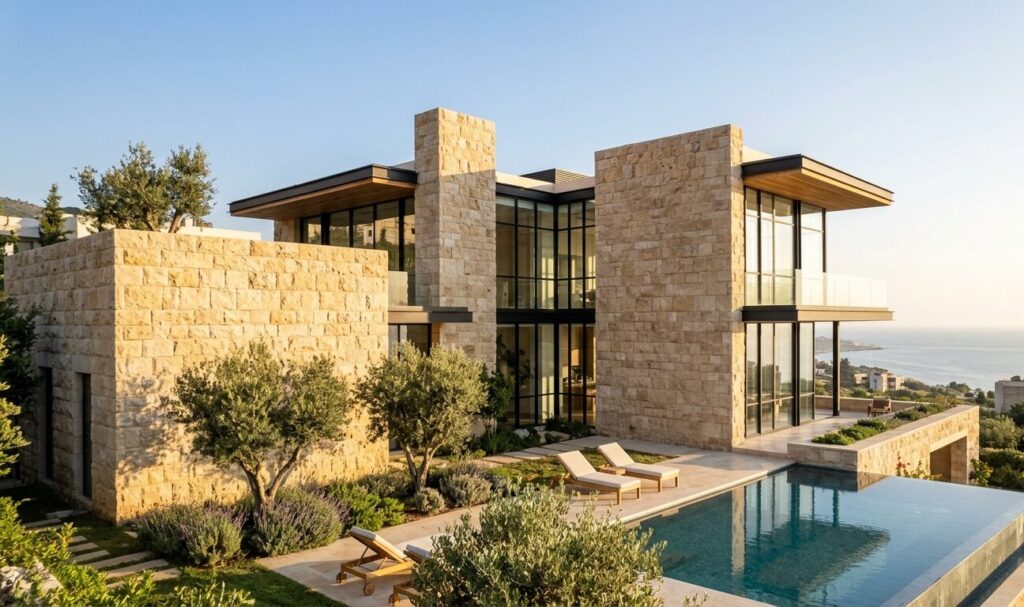
1. The Resurgence of Levantine Stone in High-End Decor
Luxury architecture is currently witnessing a tectonic shift. The cold, uniform facades of glass and steel are being softened by the organic, fossil-rich textures of natural stone. At the forefront of this movement is Levantine Stone. Unlike marble, which can feel ostentatious, Lebanese limestone offers a quiet, understated luxury.
Historically, this stone formed the backbone of Byblos and Baalbek. Today, interior architects like Georges Oueijan and studios reviving traditional “Nawl” weaving are pairing textiles with raw limestone walls to create spaces that breathe history [citation:1]. The stone’s naturally insulating properties and unique beige hues, ranging from creamy ivory to deep honey, make it irresistible for decorators seeking warmth.
When we talk about Levantine Stone, we are not just discussing a building material; we are discussing a cultural artifact. Each slab contains the memory of ancient seas, fossils of marine life, and the resilience of a region known as the cradle of civilization. To use it in a penthouse in Gemmayze or a resort in the Metn hills is to anchor modern life in deep time.
2. Why Levantine Stone Defines 2026 Luxury Aesthetics
What makes Levantine Stone superior to Italian travertine or Spanish limestone? The answer lies in its unique composition and the “spolia” tradition. In Lebanon, the practice of reusing stone from ancient ruins to build new structures is an age-old sustainability practice [citation:6].
Contemporary architects like Karim Nader, famous for the “Villa on the Rocks” in Faqra, utilize local concrete and stone to mimic the natural erosion of the landscape [citation:7]. Similarly, the restoration of the Mseilha Fort, a 17th-century limestone stronghold perched on a solitary rock, highlights the material’s durability against the elements [citation:3].
- Texture: The soft, matte finish of Lebanese limestone reduces light glare, creating a serene visual environment.
- Durability: Having weathered Mediterranean storms for millennia, it is highly resistant to salt and humidity.
- Thermal Mass: It naturally regulates temperature, reducing energy bills—a crucial factor in modern green building.
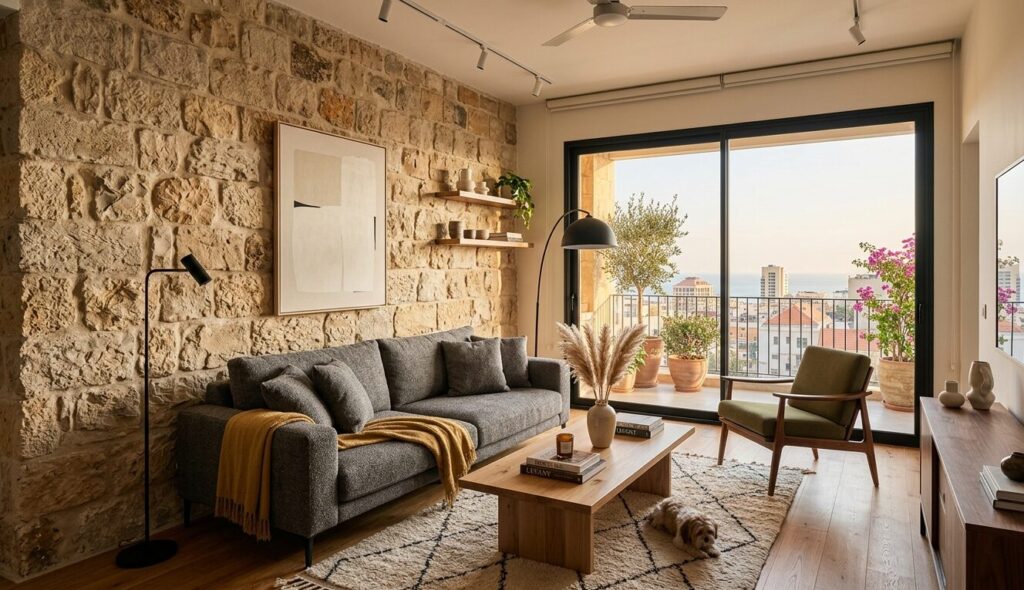
3. Lebanese Limestone in Contemporary Architecture
The application of Levantine Stone goes beyond facades. In the A.MUSE.UM project by Nadim Karam, limestone is used not just for walls but for terracing, integrating the building into the hillside like a natural outcrop [citation:10]. This “Rhizome” approach, where the building grows from the ground, is impossible to achieve with manufactured bricks.
For hoteliers and private villa owners, Levantine Stone represents security. The stone’s non-slip nature when flamed or brushed makes it ideal for pool coping and outdoor flooring. Furthermore, the recent revival of crafts like Nawl weaving shows a market trend towards authenticity; tourists and buyers no longer want sterile minimalism—they want the *genius loci*, the spirit of the place. Stone provides that immediately.
Read our guide on Sursock Museum elegance for Beirut apartment decor
4. Interior Decor: The Warmth of Levantine Stone
Moving inside, Levantine Stone transforms living rooms into galleries. The Fragmenta exhibition in Beirut showcased how “waste” marble and stone fragments are being turned into high-design objects [citation:6]. For decor, we recommend using the stone in its “honed” finish for kitchen islands and fireplace surrounds.
The tactile nature of this limestone invites touch. It pairs exceptionally well with brass, dark oak, and raw linen. Unlike polished marble, which can feel cool and distant, the matte surface of Levantine Stone creates a “hygge” atmosphere even in large, open-plan spaces. It is the ultimate material for those seeking a “Wabi-Sabi” aesthetic—celebrating imperfection and age.
5. Sustainable Tourism & The Natural Stone Cycle
The relationship between Levantine Stone and tourism is symbiotic. Tourists flock to Lebanon to see the ancient stone cities of Anjar and the restored houses of Batroun. Now, they want to stay in hotels built from the same stone.
Boutique properties like the restored Ottoman-era governor’s house in Jubayl (Byblos) rely entirely on their original limestone structure to provide authenticity [citation:4]. By choosing Levantine Stone for new builds, developers are continuing Lebanon’s narrative. It is a cyclical economy: the stone attracts tourists, and tourism revenue protects the quarries.
External Resource: Learn more about the geological history of this material at the Architectural Digest archive on Ottoman-era Lebanese homes
6. Conclusion: Why Your Next Project Needs Levantine Stone
In a world of 3D-printed concrete and vinyl siding, Levantine Stone offers a return to substance. It is heavy, durable, historical, and breathtakingly beautiful. For designers, it offers a unique selling point: a material that is simultaneously local and global, ancient and avant-garde.
We predict that Levantine Stone will dominate the pages of luxury shelter magazines for the rest of the decade. Whether you are decorating a Sursock-inspired apartment or building a coastal retreat, the answer lies beneath the surface—in the golden, fossil-rich blocks of Lebanon’s mountains.
#LevantineStone #LebaneseLimestone #LuxuryArchitecture #InteriorDesignTrends #SustainableTourism #BeirutDecor #NaturalStone