
Table of Contents
- The Psychology of Outdoor Opulence
- Material Showdown: Teak vs. Aluminum vs. Resin Wicker
- Designing the Conversation: Layouts That Breathe
- Weatherproofing Your Investment: Maintenance Rituals
- Evolving With the Season: Styling for 2026
The Psychology of Outdoor Opulence
When we discuss luxury outdoor furniture ideas, we are not merely selecting chairs and tables; we are curating an emotional state. The terrace is the transitional zone between the controlled interior and the chaotic natural world, and your furniture choices dictate how you decompress in that liminal space. Design psychology suggests that plush, enveloping seating triggers a parasympathetic response—lowering heart rate and signaling safety—which is why resort-style deep seating remains the gold standard. Conversely, hard, rigid surfaces keep the nervous system alert, perfect for dining but detrimental to evening relaxation.
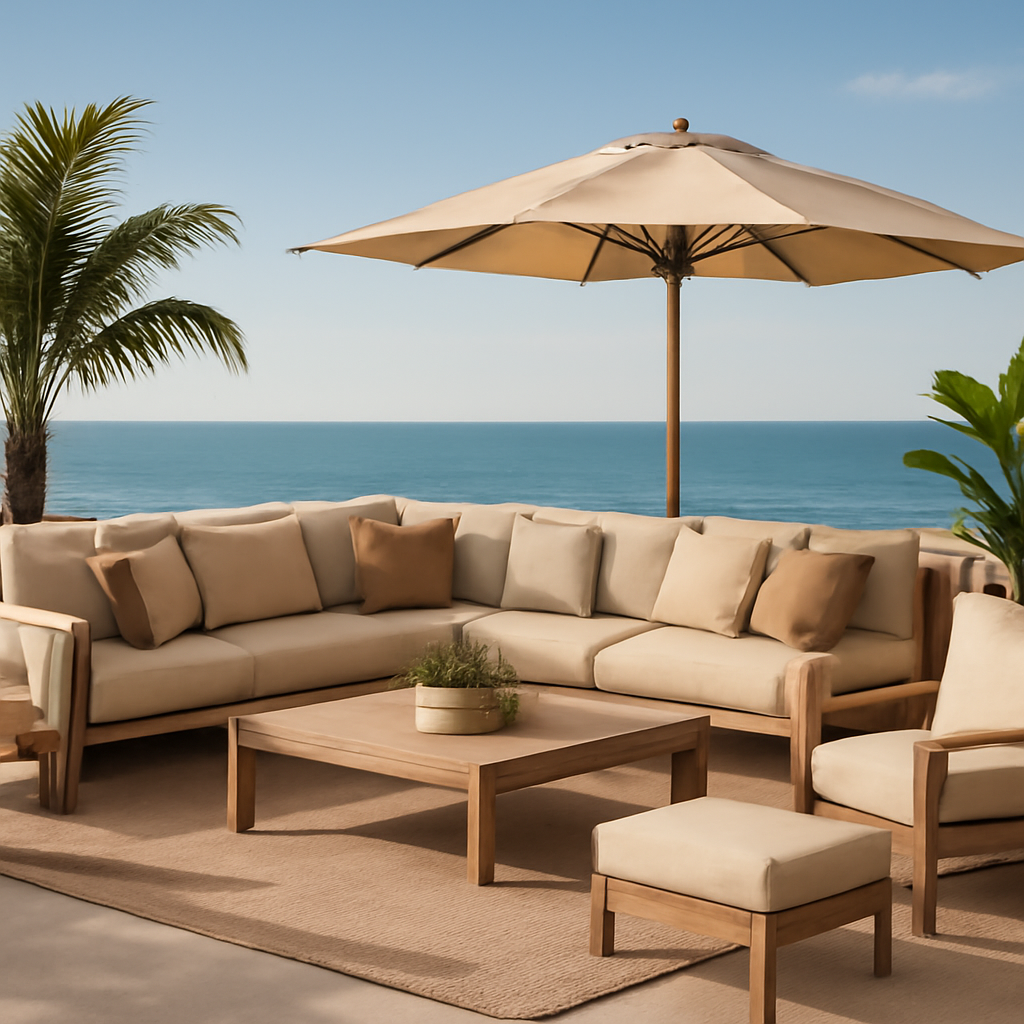
The most successful terraces are those that acknowledge this dual nature. They offer a “soft zone” for introspection and a “structured zone” for social engagement. As you read through these luxury outdoor furniture ideas, consider how each piece makes you *feel* rather than just how it *looks*. Does the sight of a modular sofa invite you to sink in with a morning coffee? Does the clean line of a teak dining table ground your midday focus? Your answers will guide your investment more accurately than any trend report.
Material Showdown: Teak vs. Aluminum vs. Resin Wicker
Choosing the wrong material is the fastest way to sabotage your outdoor sanctuary. Each primary material offers a distinct psychological and practical experience, and understanding the trade-offs is essential for a discerning buyer. Let us compare the three heavyweights in the luxury arena.
| Material | Pros | Cons | Best For |
|---|---|---|---|
| Teak | Unmatched warmth; ages to a silver patina; extreme longevity (50+ years); high oil content resists rot. | High initial cost; requires annual oiling if you prefer golden hue; heavy to move. | Dining sets and statement loungers where timeless elegance is paramount. |
| Powder-Coated Aluminum | Featherlight; rust-proof; modern, crisp aesthetic; low maintenance. | Can feel cold to the touch; may dent if gauge is thin; lacks organic texture. | Minimalist terraces, poolside lounges, and windy rooftop environments. |
| Resin Wicker (All-Weather) | Classic resort look; UV-stabilized; flexible design options; comfortable with cushions. | Can trap heat in direct sun; frame warranty varies wildly by brand; cheaper grades fade. | Casual lounging areas and humid climates where fabric breathes well. |
Designers frequently suggest a hybrid approach. Use teak for the dining anchor (structural permanence) and aluminum frames for the lounge pit (visual lightness). Avoid mixing more than two materials in one sightline to prevent visual clutter. The “what doesn’t work” scenario is often the cheap poly lumber that mimics wood but lacks the patina evolution—it stays static, and so does your enjoyment.
Designing the Conversation: Layouts That Breathe
The most common mistake in terrace design is pushing all furniture against the perimeter, creating a “waiting room” effect. This kills intimacy. The “what works” approach is to float your furniture away from the railing or wall. Create distinct “rooms” on your terrace. A 10×10 foot space can hold a cozy four-person conversation pit if you center it, leaving a 36-inch circulation path behind. This circulation path is your visual breathing room.
For larger terraces, consider the “destination layout.” Place the dining table closest to the door (high traffic), the lounge area in the middle (transitional), and a single statement daybed or hanging egg chair at the far edge (destination). This journey mimics the psychological progression from public to private. What doesn’t work is symmetrical placement—matching chairs on either side of a coffee table feels stiff. Instead, opt for asymmetry: a three-seat sofa opposite two individual swivel chairs. This imbalance encourages movement and dynamic conversation, mimicking the organic flow of a cocktail party rather than a board meeting.
Weatherproofing Your Investment: Maintenance Rituals
Luxury is not a one-time purchase; it is a commitment to care. Even the finest teak will warp if left in standing water. The “how to fix it” phase begins with proactive protection. Invest in high-quality, custom-fitted covers—they are the single most effective way to extend the life of your cushions. For teak, architectural standards indicate that leaving it unprotected to gray is acceptable, but if you desire the honey tone, apply a UV-protective teak sealer twice a year. For aluminum, simply wash with mild soap and water to prevent oxidation marks.
For resin wicker, the enemy is mildew in the crevices. Use a soft brush and a vinegar-water solution (1:1) to clean the weave without damaging the polymer coating. Cushions are where the luxury lives or dies. Look for “quick-dry” foam cores that allow water to drain through rather than absorb. To maintain them, store cushions vertically in a ventilated deck box, never stacked flat. Pro tip: flip your cushions weekly during peak season to ensure even sun fading and equal wear on the fabric fibers. This ritual not only protects your investment but also forces you to spend time with your space—a meditative practice in itself.
Evolving With the Season: Styling for 2026
As we move through 2026, the trend trajectory is shifting from stark minimalism to “warm modernism.” The luxury outdoor furniture ideas that will dominate are those that blend raw natural textures with high-tech comfort. Think sculptural stone coffee tables paired with cloud-like modular sofas in earthy clay tones. To evolve your space without a full overhaul, focus on layering textiles. Introduce outdoor rugs made from recycled PET materials—they feel plush underfoot and are incredibly durable.
Lighting is the final evolution layer. Forget harsh floodlights; opt for low-voltage LED path lighting integrated into the furniture itself, or portable rechargeable lanterns that cast a flickering amber glow. This mimics the sunset and encourages later evenings outdoors. To evolve with the season, swap heavy wool throws for lightweight linen blankets in summer, and add a fire pit table as the central anchor in autumn. The “what works” is to treat your terrace as a living organism—it should never look finished. Add a single new sculptural planter or a different cushion accent color each month. This rotation keeps the psychological novelty high, ensuring you never take your personal resort for granted.
Frequently Asked Questions
Is it worth investing in high-end teak versus a cheaper hardwood?
Yes, for the long-term. Genuine teak (Tectona grandis) contains natural rubber and oils that prevent termite damage and rot, even without treatment. Cheaper hardwoods like eucalyptus or acacia are porous and will crack within 3-5 years. While the upfront cost of teak is roughly 60% higher, its lifespan (30-50 years) makes it cheaper per year of use than replacing a budget set every four years.
How do I choose between a fire pit table and a regular coffee table?
Consider your usage psychology. A fire pit table extends the usable hours of your terrace into the evening and acts as a congregation point, lowering the ambient temperature perception. However, it sacrifices surface area for drinks. If you host dinner parties frequently, a standard coffee table is more practical. If you prefer evening nightcaps and conversation, the fire pit wins. Many 2026 models offer removable lids to convert from fire to table, offering the best of both worlds.
What is the ideal depth for a luxury outdoor sofa cushion?
Standard indoor sofa depth is around 20-22 inches. For outdoor resort-style luxury, look for seat depths of 24-26 inches. This deeper dimension allows you to sit cross-legged or lean back fully, mimicking a daybed posture. Additionally, ensure the backrest angle is at least 105 degrees to promote the “sinking” sensation associated with high-end lounging.
Your terrace is a blank canvas waiting for a narrative. Whether you choose the warmth of teak or the sleekness of aluminum, the goal is to create a space that feels like an extension of your soul—a private retreat that resets your daily rhythm. We encourage you to sketch your dream layout, touch the materials, and invest in pieces that speak to your senses. Begin your project planning today, and let your outdoor space become the luxury escape you deserve.
#LuxuryOutdoorFurnitureIdeas
#InteriorDesign2026
#HomeDecor
#Architecture
#LuxuryOutdoorFurnitureIdeasTips
#FamousLandmarks
🏛️ You Might Also Like
📚 Sources & Further Reading:
Britannica Encyclopedia
Wikipedia