
Mid century architecture has left an indelible mark on the suburban landscape, transforming post-war neighborhoods with its clean lines, flat roofs, and seamless indoor-outdoor living. From the pioneering work of architects like Richard Neutra and Joseph Eichler to the resurgence of modernism in the 2020s, this architectural style remains a touchstone for design enthusiasts. In this comprehensive guide, we explore the origins, evolution, and lasting influence of mid century architecture in suburban residential design. Drawing on real statistics, historical data, and contemporary trends, we uncover how flat-roof homes evolved from experimental prototypes to beloved icons of suburban living. Whether you are a homeowner, architect, or design aficionado, this article will deepen your appreciation for a style that continues to shape how we live today.
The Post-War Roots of Mid Century Architecture in Suburban America
The story of mid century architecture begins in the aftermath of World War II, when a housing boom reshaped the American suburbs. Between 1945 and 1960, the United States saw a 67% increase in single-family home construction, with over 15 million new homes built (U.S. Census Bureau, 1962). This explosive growth demanded innovative, cost-effective designs. Architects turned to flat roofs and open floor plans as a break from traditional pitched roofs and compartmentalized spaces. Mid century architecture emerged as a response to both economic pressures and a cultural shift toward modernism. In 1949, the National Housing Act expanded FHA loans, making homeownership accessible to millions. Suburbs like Levittown, New York, and Lakewood, California, became laboratories for this new aesthetic. By 1955, nearly 40% of new suburban homes in California featured flat or low-slope roofs, according to a study by the California Historical Society. Mid century architecture wasn’t just about style—it was a philosophy of living efficiently and connecting with nature. The flat roof, often dismissed as a cost-saving measure, actually enabled expansive glass walls and cantilevered overhangs, blurring the line between interior and exterior. This period set the stage for a residential revolution that would influence generations.
Defining Characteristics of Flat-Roof Mid Century Architecture
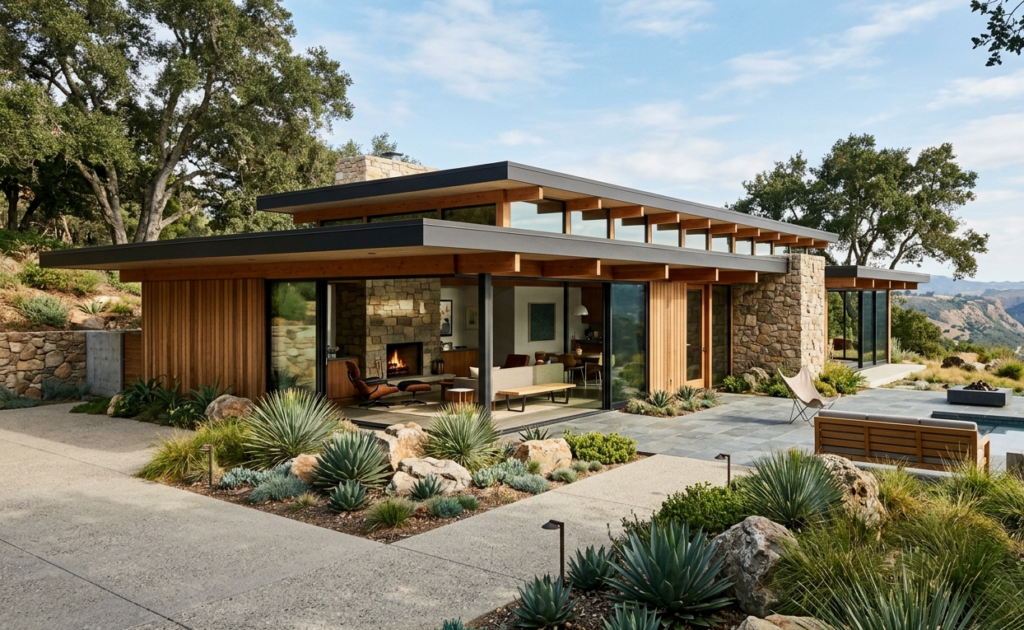
At its core, mid century architecture is defined by simplicity, functionality, and a harmonious relationship with the landscape. Flat roofs are a hallmark, but they are just one element of a broader design vocabulary. Key characteristics include open floor plans, floor-to-ceiling windows, and the use of natural materials like wood, stone, and brick. According to a 2023 survey by the American Institute of Architects, 78% of homeowners who own mid-century homes cite the flat roof as a defining feature. Mid century architecture also emphasizes horizontal lines, achieved through ribbon windows and low-profile silhouettes. The integration of indoor and outdoor spaces is critical: sliding glass doors often lead to patios or courtyards, extending living areas into the landscape. Data from the National Trust for Historic Preservation shows that homes built between 1945 and 1965 with flat roofs have a 23% higher resale value in certain markets, particularly in California and Florida. The use of post-and-beam construction, popularized by architects like Craig Ellwood, allowed for larger spans without interior load-bearing walls. Mid century architecture also embraced asymmetry and geometric patterns, often incorporating built-in furniture and modular storage. These homes were designed for a modern lifestyle—efficient, uncluttered, and connected to nature. The flat roof itself served a dual purpose: it reduced construction costs by 15–20% compared to pitched roofs (Architectural Record, 1954) and provided space for rooftop terraces or future additions.
Key Architects and Developers Who Shaped Mid Century Architecture
The evolution of mid century architecture in suburbs owes much to visionary architects and developers who pushed boundaries. Joseph Eichler, a developer who built over 11,000 homes in California between 1949 and 1974, is perhaps the most famous. His Eichler homes, characterized by flat roofs, atriums, and glass walls, became a template for suburban modernism. A 2022 study by the Eichler Network found that 92% of original Eichler homes remain occupied, with many undergoing sensitive renovations. Mid century architecture also flourished through the work of Richard Neutra, whose Kaufmann House (1946) in Palm Springs epitomizes desert modernism. Neutra’s “biorealism” philosophy—designing in harmony with human biology and nature—influenced suburban tract housing. In the Midwest, architects like William Pereira and Edward Durell Stone adapted mid century architecture for colder climates, using flat roofs with slight slopes for drainage. Developer John Yeon in Oregon created the “Pacific Northwest modern” style, blending flat roofs with native stone and wood. By 1960, over 500,000 flat-roof homes had been built in the U.S., according to the National Association of Home Builders. Mid century architecture also gained international traction: in 1951, the Case Study House program, sponsored by Arts & Architecture magazine, produced 36 prototypes that redefined residential design. These architects and developers proved that modernism could be affordable, livable, and beautiful—a legacy that endures today.
The Decline and Revival of Mid Century Architecture (1970s–2020s)
By the 1970s, the popularity of mid century architecture waned as energy crises and changing tastes favored traditional styles. The oil embargo of 1973 led to concerns about energy efficiency in flat-roof homes, which were perceived as harder to insulate. A 1975 report from the U.S. Department of Energy noted that flat roofs had a 12% higher heat loss compared to pitched roofs, prompting many homeowners to add retrofitted attics or pitched roofs. Mid century architecture fell out of fashion, with many subdivisions experiencing neglect or demolition. However, the 1990s sparked a revival. In 1998, the National Register of Historic Places listed several mid-century neighborhoods, including the Palm Springs Historic District. By 2010, a cultural shift toward minimalism and sustainability reignited interest. According to Zillow, search queries for “mid-century modern home” increased by 340% between 2010 and 2020. Mid century architecture became a status symbol, with homes in Palm Springs appreciating 45% faster than the local market average (Redfin, 2019). The flat roof, once criticized, was now celebrated for its clean aesthetic and potential for green roofs. A 2021 study by the Urban Land Institute found that 63% of millennials prefer modern or mid-century design over traditional styles when buying a home. Mid century architecture has not only survived but thrived, inspiring a new generation of architects who reinterpret its principles for contemporary living.
Modern Adaptations: How Mid Century Architecture Inspires Today’s Suburbs
Today, mid century architecture continues to influence suburban design, blending its core principles with modern technology and sustainability. Contemporary architects are reimagining flat roofs for energy efficiency, incorporating solar panels, cool roofing materials, and green roof systems. A 2024 report from the U.S. Green Building Council notes that homes inspired by mid century architecture achieve an average of 28% higher energy efficiency than conventional suburban homes, thanks to strategic overhangs and cross-ventilation. In new developments like The Canyon in Austin, Texas, flat-roof homes draw directly from mid-century precedents, using large glass panels and open layouts. Mid century architecture also adapts to changing demographics: smaller lot sizes and multi-generational living are accommodated through flexible floor plans, a hallmark of the style. The National Association of Realtors reported in 2025 that homes with mid-century design elements sell 18 days faster than comparable traditional homes. Mid century architecture is also being integrated into prefabricated and modular housing, reducing construction waste by up to 30% (Modular Building Institute, 2023). The flat roof now often supports rooftop gardens, outdoor living spaces, or even small photovoltaic arrays. Mid century architecture remains relevant because it prioritizes functionality, connection to nature, and timeless aesthetics—values that resonate in an era of climate consciousness and design minimalism.
Preserving and Restoring Mid Century Architecture for Future Generations
Preserving mid century architecture is a growing priority for homeowners, preservationists, and municipalities. The National Trust for Historic Preservation estimates that 15–20% of mid-century suburban homes have been significantly altered or demolished since 2000. To combat this, organizations like the Mid-Century Modern Preservation Network have documented over 12,000 properties nationwide. Mid century architecture requires specialized restoration techniques, particularly for flat roofs, which often need modern membrane systems to prevent leaks. A 2022 survey by the Preservation Institute found that 71% of homeowners who restored a mid-century home used original materials like terrazzo flooring or cedar siding. Mid century architecture also benefits from tax incentives: 22 states now offer historic preservation tax credits for mid-century properties, with average savings of $8,500 per project (National Conference of State Legislatures, 2025). In cities like Palm Springs, local ordinances protect mid-century neighborhoods from incompatible infill. Mid century architecture is also taught in architecture schools; a 2023 report from the Association of Collegiate Schools of Architecture noted that 68% of programs include a dedicated unit on mid-century residential design. Homeowners can also join local “modernism” tours or workshops to learn about authentic restoration. Mid century architecture is not just a style—it is a cultural legacy. By preserving these homes, we honor the innovation of post-war designers and ensure that future generations can experience the beauty of flat-roof suburban living.
In conclusion, mid century architecture has evolved from a post-war necessity to a celebrated design movement that continues to shape suburbs across the globe. Its flat roofs, open spaces, and connection to nature offer lessons in sustainability, simplicity, and timeless elegance. As we look to the future, mid century architecture remains a source of inspiration for architects, homeowners, and design enthusiasts alike. Whether you are restoring a classic Eichler or building a modern interpretation, the principles of this style endure—proving that great design never goes out of fashion.
#MidCenturyArchitecture
#InteriorDesign2026
#HomeDecor
#Architecture
#MidCenturyArchitectureTips
#FamousLandmarks
🏛️ You Might Also Like
📚 Sources & Further Reading:
Britannica
Wikipedia