
Beirut heritage architecture is a living, breathing chronicle of resilience, where Phoenician foundations meet Ottoman arches, French Mandate facades, and brutalist concrete masterpieces. As we step into 2026, the city’s historic buildings are not just relics but active participants in a vibrant urban dialogue. This comprehensive guide delves into the intricate layers of Beirut’s built environment, from the restored pearl of the Beirut Souks to the weathered stone of Gemmayzeh. We will explore how war, reconstruction, and a new wave of adaptive reuse have shaped a unique architectural identity. For design enthusiasts, Beirut offers a masterclass in juxtaposition—where a 19th-century mansion sits proudly next to a cutting-edge gallery, and where every crack in the plaster tells a story of survival and reinvention. In this post, we will uncover the key districts, styles, and restoration efforts that define this extraordinary cityscape, proving that beirut heritage architecture is not merely a memory but a forward-looking canvas.
1. The Historical Layers: From Phoenician to Ottoman
To truly understand beirut heritage architecture, one must start underground. Beirut’s urban fabric is built atop at least five millennia of continuous habitation. Excavations beneath the Beirut Central District (BCD) have revealed Phoenician, Hellenistic, Roman, Byzantine, and Mamluk strata. The most significant visible remnants are the Roman Baths, dating to the 2nd century AD, which sit in a public garden, surrounded by Ottoman-era hammams. According to a 2022 report by the Lebanese Ministry of Culture, over 60% of the city’s pre-1975 building stock was damaged during the civil war (1975-1990), yet the foundational layout of the old city remains remarkably intact.
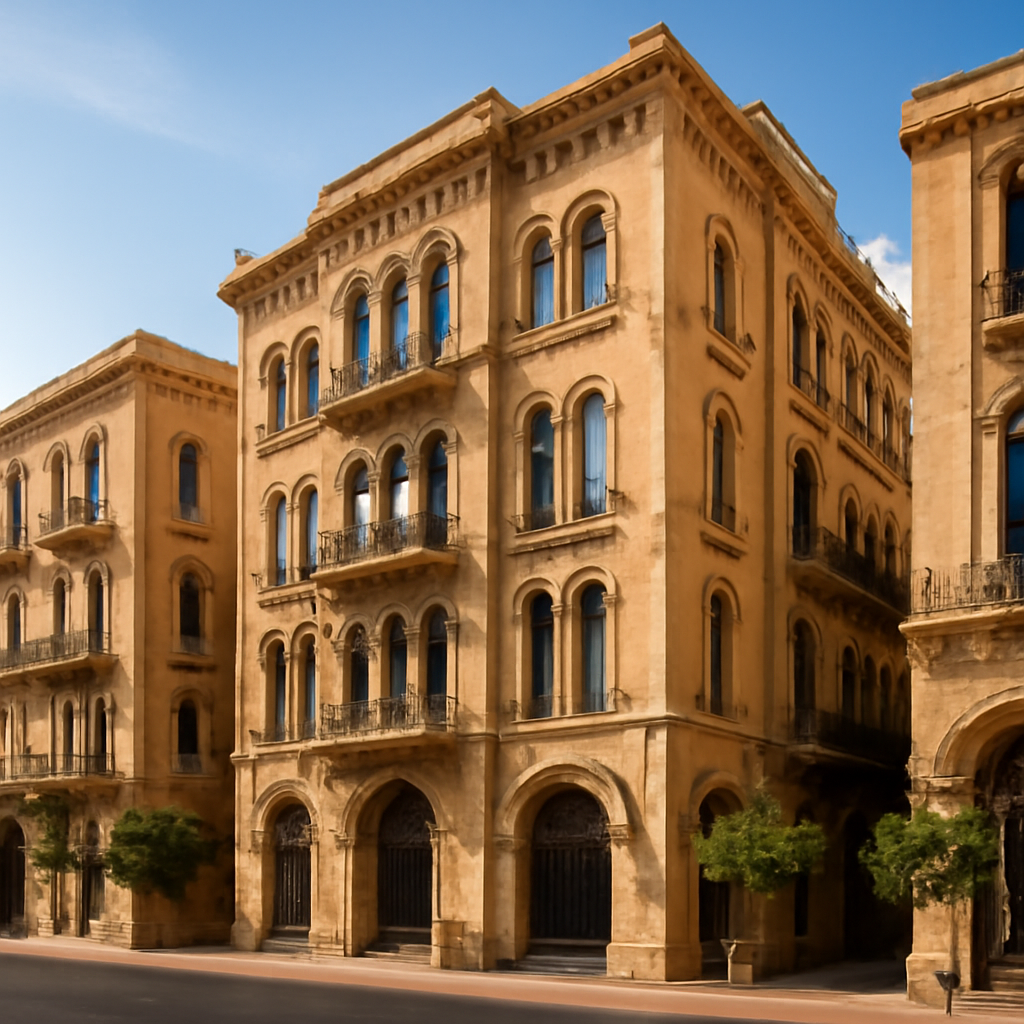
The Ottoman period (1516-1918) left an indelible mark on beirut heritage architecture, characterized by the iconic “triple-arched” windows, red-tiled roofs, and sandstone facades. The traditional Lebanese house, with its central hall (liwan) and internal courtyard, was adapted to Beirut’s narrow plots. Notable surviving examples include the Nicolas Sursock Museum (built 1912), which now serves as a contemporary art space. A 2024 survey by the Association for the Protection of Lebanese Heritage (APLH) noted that only 15% of Ottoman-era residential buildings in the city remain in their original condition, making their preservation a high priority. These structures are not just aesthetic; they are passive cooling systems, with thick stone walls and high ceilings that reduce interior temperatures by up to 5°C without electricity.
2. French Mandate & Modernist Influences
The French Mandate (1920-1943) introduced a new architectural vocabulary to beirut heritage architecture. Architects like Antoine Tabet and Michel Écochard blended Art Deco, Neo-Mamluk, and Rationalist styles. The iconic “Beirut skyline” of the 1930s featured buildings with rounded corners, horizontal banding, and geometric ironwork. A prime example is the Grand Theatre (now the city’s cultural center), built in 1932, which showcases a striking mix of Art Deco and Orientalist motifs. According to a 2021 study published in the *Journal of Levantine Studies*, approximately 120 buildings from this era survive in the core districts, but only 20% are legally protected.
This period also saw the introduction of reinforced concrete, which allowed for taller structures and larger spans. The 1930s “Béton Brut” style was later refined by Lebanese modernists in the 1950s and 60s. The influence of Le Corbusier is evident in the Ministry of Tourism building (1956) and the iconic Beirut Arab University (1960). These modernist landmarks are integral to beirut heritage architecture, representing a forward-looking optimism that was abruptly halted by war. A 2023 heritage impact assessment by AUB’s Department of Architecture found that these modernist structures are the most at-risk due to neglect and lack of maintenance, with 45% showing severe structural degradation. Yet, their clean lines and functionalist logic continue to inspire contemporary designers.
3. The Resilient Heart: Post-War Restoration Districts
Following the 1990 Taif Agreement, reconstruction efforts—led primarily by Solidere—transformed the Beirut Central District. While criticized for erasing some historic fabric, the project also restored several key monuments. The most successful example is the restoration of the Beirut Souks, which preserved the original street grid and incorporated salvaged Ottoman stone elements. Today, beirut heritage architecture in the BCD is a hybrid: restored 19th-century mansions like the Beirut Municipality building (1920s) sit beside new glass towers, but the historic core retains its pedestrian scale.
Outside the BCD, the neighborhoods of Gemmayzeh and Mar Mikhael became epicenters of grassroots restoration. In 2020, the devastating port explosion damaged over 8,000 heritage buildings, according to UNESCO’s preliminary damage assessment. In response, international NGOs and local volunteers initiated emergency stabilization works. By 2025, the “Beirut Heritage Initiative” reported that 60% of the damaged buildings in these districts had undergone structural repairs, though full restoration remains ongoing. The key to this resilience lies in the adaptive reuse of spaces—former family homes are now boutique hotels, art galleries, and design studios. This organic approach keeps the architectural character alive while ensuring economic viability. Walking through Gemmayzeh, you see the layers of beirut heritage architecture: a 1900s house with a modern steel-and-glass extension, a Mamluk-era wall incorporated into a café’s interior.
4. Iconic Landmarks: A Walk Through Time
No exploration of beirut heritage architecture is complete without visiting its iconic landmarks. The Mohammad Al-Amin Mosque (completed 2008) is a contemporary addition, yet its Ottoman-inspired design and blue-domed silhouette harmonize with the city’s older skyline. In contrast, the Roman Hippodrome (2nd century AD) remains a silent witness to ancient chariot races. The Sursock Palace (1860) and the nearby Sursock Museum (1912) are prime examples of the Italianate and Ottoman styles that defined aristocratic living. A 2024 architectural survey by the Beirut Design Week committee identified these landmarks as the most photographed and studied, yet they also highlight the disparity in preservation funding.
The famous “Yellow House” (Palais du Peuple) near the Sassine Square, abandoned since 1975, is a powerful symbol of war and memory. Its faded yellow facade and bullet-riddled walls are a stark contrast to the polished restoration of the BCD. However, a 2025 proposal by the Lebanese Order of Engineers suggests converting it into a museum of memory, preserving its damaged state as a memorial. This approach—known as “conservation of ruin”—is gaining traction in beirut heritage architecture circles. It challenges the notion that restoration must always mean returning to a pristine state. Instead, it argues that the scars are part of the building’s biography, and by preserving them, we honor the city’s complex history. This nuanced perspective is critical for future conservation strategies.
5. Adaptive Reuse & Contemporary Interventions
The most exciting frontier of beirut heritage architecture lies in adaptive reuse. Architects are now inserting modern functions into historic shells, creating a dynamic dialogue between old and new. A stellar example is the “Beit Beirut” museum (opened 2018) in a 1924 building, which incorporates exposed concrete and original bullet holes as part of its exhibition on the war. Another is the transformation of a 1930s soap factory in Saifi Village into the “Soap Boutique” and design studios. According to a 2025 report by the Beirut Urban Lab, adaptive reuse projects in the city have increased by 35% since 2019, driven by both economic necessity and a growing appreciation for sustainable heritage.
These interventions are not without controversy. Some purists argue that inserting a steel staircase into a 19th-century vaulted hall compromises its integrity. However, proponents counter that without new uses, these buildings face demolition. The key is a sensitive approach that respects the original materials and spatial logic. For instance, the renovation of the “Palais de Justice” (1934) into a cultural hub retained the original courtrooms while adding a modern auditorium in the basement. This blend of preservation and innovation ensures that beirut heritage architecture remains relevant to a new generation. It also attracts international investment, as seen in the 2024 opening of a luxury hotel in a restored Ottoman palace in Achrafieh, which employs 200 local craftsmen for ongoing maintenance.
6. Preservation Challenges & Future Outlook
Despite its resilience, beirut heritage architecture faces severe existential threats. The economic crisis since 2019 has slashed public budgets for heritage maintenance. A 2023 UNESCO report stated that 70% of Lebanon’s historic buildings lack basic legal protection, and only 10% are covered by any form of insurance. The 2020 port explosion added further strain, with an estimated $500 million needed for full restoration of affected heritage sites. Moreover, real estate pressure continues to lead to illegal demolitions. In 2024 alone, the NGO “Save Beirut Heritage” documented 12 demolitions of protected buildings in the city.
However, there is a silver lining. Grassroots movements, digital documentation (using 3D scanning), and international funding are creating new models. The “Beit el Baraka” project in Karantina is a cooperative that restores and rents out heritage houses to young families, ensuring long-term stewardship. Furthermore, the 2025 “Beirut Heritage Charter” was signed by 15 municipalities, committing to stricter enforcement of preservation laws. Looking forward, the integration of beirut heritage architecture with modern sustainable technologies—such as solar panels on red-tiled roofs and rainwater harvesting in courtyards—is a promising trend. By 2030, experts predict that 30% of restored buildings will incorporate such green retrofits. The future is not about freezing the past but about allowing it to evolve while preserving its soul.
In conclusion, beirut heritage architecture is a testament to the city’s unyielding spirit. From Roman baths to Ottoman mansions, from French Mandate boulevards to post-war reconstructions, every layer adds depth to its urban narrative. As we move through 2026, the challenge is not just to preserve these buildings but to integrate them into a living, breathing city. Whether through adaptive reuse, community-led initiatives, or innovative conservation techniques, Beirut’s historic structures are finding new purpose. For architects, designers, and travelers, this city offers an unparalleled lesson in resilience and creativity. We invite you to explore, respect, and contribute to the ongoing story of beirut heritage architecture—because to preserve it is to preserve a fragment of humanity’s collective memory.
FAQ: Beirut Heritage Architecture
What is the oldest surviving building in Beirut?
The oldest surviving structures are the Roman Baths, dating back to the 2nd century AD, located in the Beirut Central District. However, archaeological remains from the Phoenician era (circa 1000 BC) have been found beneath the city, but are not visible above ground. The Roman Baths are the most accessible and well-preserved ancient monument in the city.
How can I identify an authentic Ottoman-era house in Beirut?
Look for triple-arched windows (often with pointed or horseshoe arches), red-tiled roofs, sandstone or limestone facades, and a central hall layout. The interiors often feature high ceilings, wooden shutters, and decorative ironwork. Many of these houses are now converted into museums, restaurants, or private residences, particularly in the Gemmayzeh and Mar Mikhael districts.
Are there any legal protections for heritage buildings in Beirut?
Yes, but enforcement is weak. The Law 37/2008 provides for the listing of historic buildings, but only about 150 buildings are officially protected. In 2025, the “Beirut Heritage Charter” was signed to strengthen local enforcement, yet many buildings remain at risk due to economic pressures and lack of funding. Community organizations and NGOs play a crucial role in monitoring and advocacy.
#BeirutHeritageArchitecture
#InteriorDesign2026
#HomeDecor
#Architecture
#BeirutHeritageArchitectureTips
#FamousLandmarks
🏛️ You Might Also Like
📚 Sources & Further Reading:
Britannica Encyclopedia
Wikipedia