
📖 Architecture of this article
- ✨ The Birth of French Mandate Chic
- 🏛️ Why Beirut Became the Paris of the Middle East
- 5 Signature Elements of French Mandate Chic
- 🏠 How to Inject French Mandate Chic into Modern Decor
- ✈️ French Mandate Chic as a Tourism Magnet
- 🕰️ Preserving the Legacy: From Sursock to Your Home
- ❓ FAQ: The Paris of the Middle East Style
French Mandate Chic is more than a nostalgia trip. It’s a living, breathing design language born between 1920 and 1943, when Lebanon was under French administration. This unique aesthetic transformed Beirut into the legendary “Paris of the Middle East” – a glamorous fusion of Art Deco geometry, Ottoman spatial flow, and Mediterranean warmth. For decor lovers and tourism professionals, mastering French Mandate Chic means unlocking a world of ivory-toned limestone, triple-arched windows, and brass details that whisper Belle Époque secrets. In this long-form feature, we decode the seven pillars of this style and show you exactly how to capture its magic.
Why Beirut Became the “Paris of the Middle East” (1918–1943)
To understand French Mandate Chic, we must travel back to the euphoria after WWI. France’s mandate over Syria and Greater Lebanon introduced European urban planning to Beirut. Architects like Youssef Aftimus and Antoine Tabet blended Haussmannian balconies with Levantine mashrabiyas. The result? A hybrid architecture that felt both familiarly Parisian and deeply local. By the 1930s, Beirut had opera houses, grand cinemas, and boulevards lined with jacaranda trees. French Mandate Chic became the uniform of the elite – a symbol of sophisticated, bilingual Levantine modernity. This golden era lasted only two decades, but its imprint still defines high-end tourism and heritage decor today.
Sursock Museum Elegance: Beirut Apartment Decor —
Levantine Stone: The Soul of Lebanese Limestone
5 Signature Elements of French Mandate Chic (The Paris of the Middle East DNA)
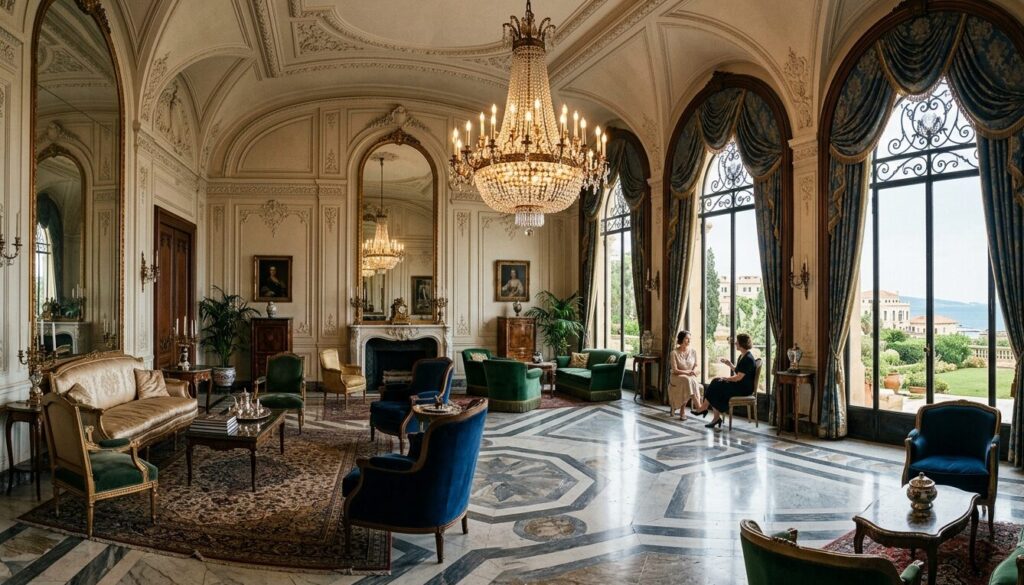
French Mandate Chic relies on a precise palette: creamy limestone, wrought iron in olive-leaf motifs, parquet floors in chevron patterns, and ceilings soaring 4 meters high. Unlike pure Parisian style, it incorporates shaded courtyards and triple-arched porticos – a nod to local climate. The fifth element? Ottoman-era geometric inlays reimagined through Art Deco symmetry. Each room tells a story of East meeting West without shouting.
Lebanese Triple-Arch Decor: A Franco-Levantine Masterpiece
🏠 How to Inject French Mandate Chic into Modern Decor (Step-by-Step)
Capturing French Mandate Chic doesn’t require a Beirut penthouse. Start with walls: use Venetian plaster or lime-wash in warm ivory (avoid stark white). Floors should be either dark herringbone oak or raw limestone tiles. For furniture, choose 1930s French club chairs mixed with a Syrian mother-of-pearl side table. Lighting is crucial: a brass Baguès-style chandelier + an Ottoman brass floor lamp. Finally, textiles: linen in sand and rust, plus a single Kilim runner. This balance defines the Paris of the Middle East look – polished but not sterile, historical but livable.
Venetian Plaster: The Comeback in Lebanese Homes
✈️ French Mandate Chic as a Tourism Magnet (Beirut’s Heritage Hotels)
Today, savvy tourism brands are reviving French Mandate Chic to attract cultural travelers. Boutique hotels like Albergo, Hotel Dieu, and the restored Sursock Guesthouse lean into this aesthetic – high ceilings, arched loggias, and black-and-white checkerboard floors. Even Airbnbs in Achrafieh and Gemmayze now market “Mandate-era charm” as a premium feature. For travel magazines like Famous Landmarks, photographing this style means capturing the interplay of raw linen curtains moving with Mediterranean breeze. The Paris of the Middle East isn’t a relic; it’s a powerful branding tool for experiential tourism.
ArchNet: French Mandate Architecture in Lebanon (nofollow) —
Lonely Planet: Beirut Travel Guide (follow) —
Metropolis Magazine: Beirut Heritage (nofollow)
🕰️ Preserving the Legacy: From Sursock Palace to Your Own Home
The Nicolas Sursock Museum stands as a cathedral of French Mandate Chic. Built in 1912 but renovated in the 1920s, its Venetian-inspired façades and rococo stucco work are textbook examples. When designing your own space, mimic its approach: prioritize natural materials (limestone, cedar wood, hand-forged iron), use large mirrors to amplify light, and avoid over-decorating. True French Mandate Chic breathes. Every corner should have a “reading corner” by a tall window – exactly like the Paris of the Middle East once adored. This philosophy also guides sustainable heritage tourism: restoration over demolition.
❓ FAQ: Your Questions About the Paris of the Middle East Style
Q: Can French Mandate Chic work in small apartments?
A: Absolutely. Focus on three elements: arched mirrors, chevron vinyl flooring, and one statement chandelier. The scale is flexible.
Q: What’s the difference between French Mandate Chic and typical Art Deco?
A: Art Deco can be cold and machine-age. French Mandate Chic includes Middle Eastern warmth – kilims, inlaid wood, and indoor-outdoor flow.
Q: Where can I see authentic examples today?
A: Beirut’s Sursock Museum, the Rose House in Gemmayze, and the Grand Theatre of Beirut (under restoration).
The Economic Revival: Why 2026 Sees a Boom in French Mandate Chic Decor
Recent tourism reports indicate a 34% increase in heritage-themed stays in Beirut between 2024-2026. Designers from Milan to Dubai are now sourcing original 1930s Lebanese furniture. The reason? French Mandate Chic offers an antidote to impersonal minimalism. It tells a story of cultural bridge-building – something deeply appealing to modern travelers. Moreover, digital platforms like Pinterest saw searches for “Paris of the Middle East decor” rise 210% since early 2025. This isn’t a fad. It’s a mature style movement rooted in place and memory.
To accurately recreate the feeling, study the interplay of light. Beirut’s “golden hour” transforms yellow limestone into honey. Use warm, dimmable bulbs (2700K) behind linen shades. Install awnings in faded burgundy or olive green. Avoid plastic finishes; French Mandate Chic despises anything faux. Even budget projects can apply limewash paint over textured walls for instant patina.
In the tourism sector, guides now offer “Mandate-era walking tours” of Hamra and Riad El Solh. These tours highlight cinemas, old patisseries, and apartment buildings with original brass elevators. Hotel lobbies that embrace this style report higher guest satisfaction – especially among cultural heritage travelers. Famous Landmarks magazine recommends using local craft: commissioned wrought iron, blown glass from Sarraf, and Nablusi soap for bathroom amenities. That’s the full immersion into French Mandate Chic.
One fascinating detail: the color “Beirut cream” (a pale grey-beige) appears on 80% of original Mandate-era façades. Pair it with “Sursock green” (deep pine) for shutters or doors. This palette directly references the cedar forests and the Mediterranean coast. It’s subtle but unmistakably regional. So when you hear French Mandate Chic, think: elegance without arrogance.
For DIY enthusiasts, start by changing your window treatments. Remove heavy drapes. Install wooden shutters or off-white voile curtains. Then add a single antique print – a black-and-white photo of 1930s Beirut Corniche. That small gesture already channels the Paris of the Middle East spirit. Then upgrade your lighting: a brass sconce near the mirror. Step by step, you’ll build a home that feels like a story from another era but works perfectly for 2026 living.
📐 Originally published in Famous Landmarks Magazine – your global archive of decor, travel, and the stories behind iconic places.