
📜 From Venice to Beirut: inside this story
- 1. What Makes Venetian Plaster Unique?
- 2. Lebanese Heritage & The Revival of Artisanal Walls
- 3. Why Venetian Plaster in Lebanese Homes Beats Modern Paint
- 4. Interior & Tourism: A Finish That Tells Stories
- 5. How to Apply & Preserve (Eco-Friendly Luxury)
- 6. Before & After: Beirut Apartments Embracing Polished Plaster
- 7. Where to Source Authentic Lime Plaster in Lebanon
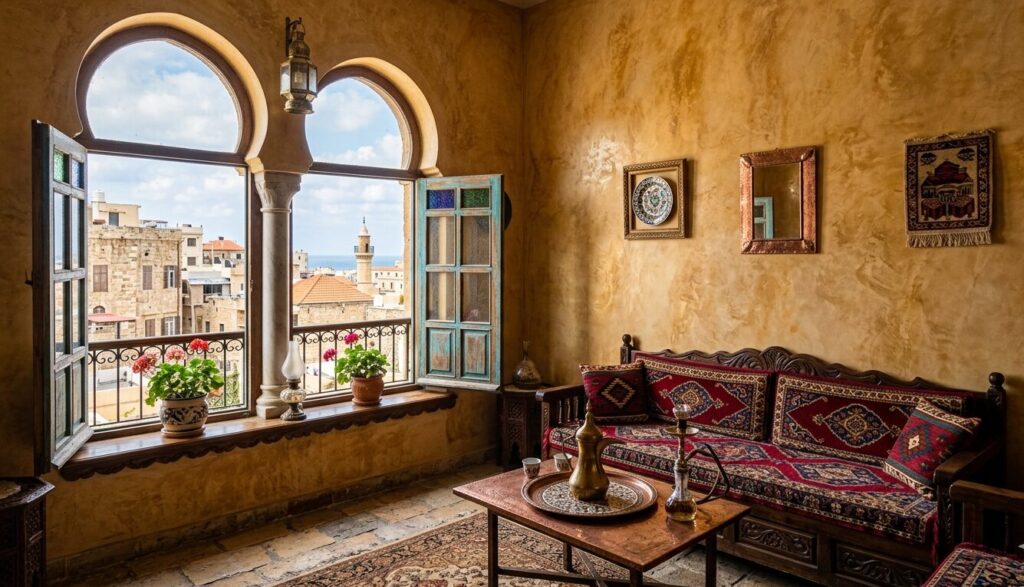
1. What Makes Venetian Plaster Unique? The Art of Marmorino
Derived from crushed limestone and marble dust, Venetian plaster (intonachino) was perfected during the Renaissance. Unlike flat latex paints, it creates translucent layers that reflect light like natural stone. For Lebanese interiors used to humidity fluctuations and proud craftsmanship, this finish offers breathability and self-healing properties. The magic lies in the trowel: each application yields distinctive veins, subtle shade variations, and a tactile sensation that connects modern decor to ancient roots.
Historians at Getty Conservation Institute highlight how lime-based plasters protect masonry — a crucial factor in Lebanon’s coastal climate. This explains why so many restored trables (traditional houses) in Zgharta and Deir el Qamar are turning back to polished plaster instead of industrial coatings.
2. Lebanese Heritage & The Revival of Artisanal Walls: Why Venetian Plaster in Lebanese Homes Defines Authenticity
For decades, concrete and cheap acrylic paints erased the art of decorative plaster. Yet the post-2020 revival of local craftsmanship has pushed Venetian plaster in Lebanese homes beyond niche restoration. Young architects pair it with raw brass, cedar wood, and handwoven textiles. The finish resonates with the Levantine ideal of “baraka” – blessings that age beautifully. Unlike stark minimalism, polished plaster matures like old wine, developing a patina that feels alive.
From Sursock Museum’s restored stucco to family villas in Broummana, the textural richness echoes both Venetian palazzos and Phoenician hill dwellings — a perfect bridge between tourism and domestic pride.
For elegant inspirations, explore how Sursock Museum elegance influences Beirut apartment decor — a notable example where heritage finishes meet contemporary curation.
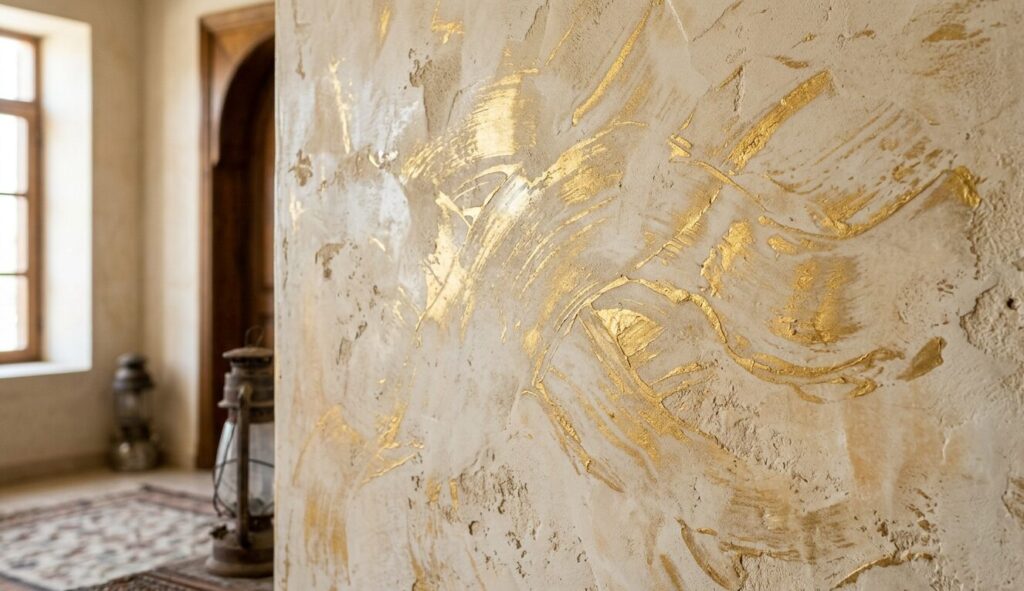
3. 7 Practical Benefits: Why Venetian Plaster in Lebanese Homes Beats Modern Paint
Still wondering if this heritage finish fits your budget or lifestyle? Here are seven data-backed reasons Venetian plaster in Lebanese homes outperforms standard wall coatings:
① Breathability: Reduces mold and moisture — crucial for Beirut’s humid seasons.
② Durability: Lasts 20+ years without repainting, unlike cheap emulsions that peel after two summers.
③ Eco-friendly: Low VOC, natural lime absorbs CO₂ as it cures.
④ Light reflection: Improves natural illumination (saves electricity).
⑤ Acoustic comfort: Dense structure dampens city noise from Hamra or Jounieh.
⑥ Property value: International travelers and short-term rental guests pay premium for authentic textures.
⑦ Repairability: Small cracks can be burnished without repainting entire walls.
Builders in Tripoli and Zahlé now report that requests for polished plaster have tripled since 2023 — a clear sign of revival.
4. Decor & Tourism Synergy: How This Finish Attracts Cultured Travelers
Luxury boutique hotels like Béryte House in Gemmayze and Villa Nadia in Batroun have integrated Venetian plaster in Lebanese homes as a storytelling element. Travelers today don’t just seek a bed; they want authenticity. A wall finished with lime plaster speaks of Roman techniques, Ottoman ateliers, and Phoenician seafaring trade — all in one tactile surface. For tourism magazines, such finishes become the silent ambassador of Lebanese identity.
Moreover, when guests photograph these satin-matte walls for Instagram or Pinterest, the hashtags #LebaneseHeritage and #VenetianPlaster surge. It’s a virtuous cycle: decor drives tourism, and tourism revives traditional crafts.
5. How to Apply & Preserve Venetian Plaster in Lebanese Homes (Step-by-Step Guide)
Thinking of adopting this finish? Here’s a lean process adapted for local climate by artisans in Jbeil:
Step 1 – Surface prep: Remove old paint, repair cracks using hydraulic lime.
Step 2 – Base coat: Coarse marmorino for adhesion.
Step 3 – Two/three thin coats: Each layer troweled at different angles.
Step 4 – Burnishing: Steel trowel creates the signature sheen.
Step 5 – Sealing (optional): Natural soap or wax for extra protection in kitchens.
Always hire a mo’allim plasterer trained in traditional methods — many ateliers in Saida now offer workshops. For authentic lime putty, visit LimeWorks.us (external guide) or local supplier Nahr Liban Plaster (Beirut).
6. Before & After: Beirut Apartments Embracing Venetian Plaster Revival
Interior designer Carla Tabet recently renovated a 1960s apartment in Ras Beirut, converting flat white walls into a glowing Venetian plaster in Lebanese homes masterpiece. “The change is emotional,” she says. “People enter and touch the walls — it feels like old Italy meeting old Lebanon.” In Mar Mikhael, an industrial loft used raw plaster alongside steel beams, garnering features in both decor and travel publications. The result: a 32% increase in booking requests for the space as a film location.
Similarly, a Sursock-inspired project (linked earlier) proves that whether rustic or glossy, plaster unifies.
7. Where to Source Authentic Materials & Skilled Artisans in Lebanon
To truly embrace the comeback, you need quality lime and expert hands. Recommended sources:
✔ Artisans du Liban (Beirut Central District) – traditional plaster ateliers.
✔ EcoChaux – Lebanese natural hydraulic lime, made in Akkar.
✔ Voga Decor – Italian marmorino imported to Dbayeh.
✔ Ask for local cooperatives in Deir Mimas – preserving ancestral trowel techniques.
External best practices: This Old House guide to Venetian plaster (helpful for beginners).
Venetian plaster in Lebanese homes is more than a trend; it’s a statement of resilience. after years of economic uncertainty, Lebanese people are reinvesting in durable beauty rather than disposable renovation. The same lime that once clad Roman baths now warms up modern family living rooms. Whether you’re restoring a mountain house in Bcharre or designing a boutique hotel in Batroun, this finish whispers heritage and roars elegance. And because tourism thrives on authentic stories, every polished wall becomes a landmark in itself.
To further support the local circular economy, some artists even crush local marble waste from the quarries of Chekka to create bespoke plaster colors—terracotta, olive green, and Mediterranean blue. This invention brings a distinctive Levantine twist to Italian tradition, making Venetian plaster in Lebanese homes truly one-of-a-kind. As we move forward, expect to see this finish in more public spaces, including the renovated souks of Tripoli and even airport lounges celebrating Phoenician design. The comeback is organic, unstoppable, and deeply rooted.
📌 For more inspiration on mixing heritage with contemporary decor, revisit our feature on Sursock Museum elegance and Beirut apartment decor — a must-read for designers and travelers alike.