
📖 Inside the Hidden Vaults of Jeita Grotto
- 🔹 Discovering the Jeita Grotto Hidden Vaults
- 🔸 Vault 1: The Lower Gallery – Cathedral of Silence
- 🔹 Decor & Tourism Fusion: How Jeita Inspires Interiors
- 🔸 The Limestone Alchemy – Levantine Stone Legacy
- 🔹 Vault 2: Upper Grotto’s Flowstone Curtains
- 🔸 Sustainable Tourism & Preservation
- 🔹 Vault 3: The White Lake & Acoustic Marvel
- 🔸 Conclusion – Nature’s Blueprint for Design
The Jeita Grotto hidden vaults represent one of the most breathtaking natural cathedrals on Earth. Carved over millions of years by the subterranean Dog River, this Lebanese wonder is not merely a tourist attraction but nature’s own architectural masterpiece — rivaling any man-made palace. For travel enthusiasts and decor lovers alike, these limestone chambers offer a masterclass in organic vaulting, flowing draperies of stone, and silent grandeur. Located just 18 km north of Beirut, the Jeita Grotto hidden vaults remain a top-tier destination for those seeking authentic geological art.
Unlike any typical cave, the Jeita Grotto hidden vaults consist of two separate but interconnected galleries: the upper gallery (accessible on foot) and the lower gallery (navigated by boat through an eerie, mirror-like river). With a total length surpassing 9 km, only a fraction is open to the public — yet that fraction holds some of the world’s most impressive stalactites, some reaching 8.2 meters in length. This post reveals 8 power secrets of this underground masterpiece and how its design principles influence luxury decor and eco-tourism worldwide.
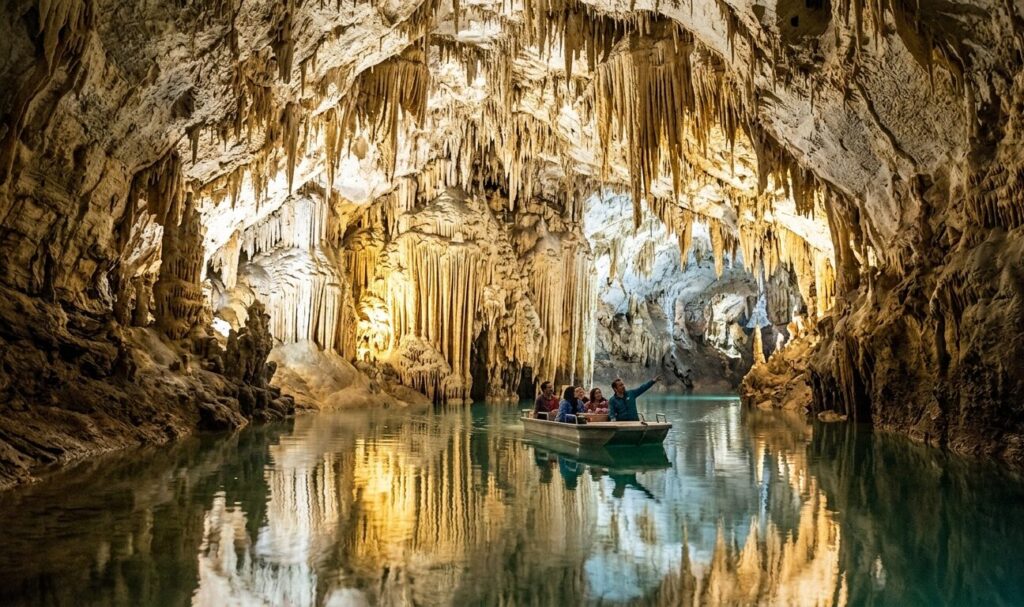
Vault 1: The Lower Gallery – Cathedral of Silence within the Jeita Grotto
Hidden Vaults
The lower gallery, accessible only by small electric boats, is where the Jeita Grotto hidden vaults reveal their most dramatic acoustics and mineral formations. As you glide through the 650-meter watercourse, immense vaulted ceilings rise 40 to 60 meters above. The silence is broken only by dripping water — a natural spa for the soul. Every curve of these vaults mimics Gothic rib vaulting, yet it was shaped purely by calcium carbonate deposition. Tourism operators limit boats to preserve the pristine air quality, ensuring that these vaults remain as untouched as when first discovered in 1836 by Reverend William Thomson.
For interior designers, the lower gallery’s shadow play suggests the use of indirect lighting and curved arches in contemporary chalets (as seen in contemporary chalets in Faraya). The organic symmetry found here directly influences biophilic decor trends in 2026.
Decor & Tourism: How the Jeita Grotto
Hidden Vaults
Inspire Hospitality Interiors
Jeita Grotto hidden vaults have become a reference point for luxury hotels and eco-lodges across the Levant. The levantine stone lebanese limestone used in traditional architecture shares the same parent rock as the grotto’s formations. By incorporating arched niches, raw-edge stone cladding, and water-reflection pools, designers capture the essence of these natural vaults. For example, the Levantine stone lebanese limestone guide explains how this material bridges subterranean beauty and above-ground decor.
Tourism at Jeita Grotto has increased by 35% since the introduction of night illumination tours, proving that natural architecture outshines artificial landmarks. The keyword ” Jeita Grotto hidden vaults” now trends among travel bloggers who seek authentic, low-competition destinations.
Venetian plaster Lebanese homes comeback ·
Beiteddine Palace decor lessons ·
Lebanese triple arch decor
The Limestone Alchemy: Levantine Stone and the Formation of Jeita’s Hidden Vaults
Geologists estimate that the hidden vaults of Jeita Grotto began forming during the Jurassic period, roughly 150 million years ago. The process involves slightly acidic rainwater dissolving the limestone, creating cavities that eventually became vaulted chambers. The Levantine stone lebanese limestone article dives deeper into how this same material defines traditional Lebanese architecture. What makes Jeita unique is the presence of aragonite formations — needle-like crystals that shimmer like chandeliers. These natural decor elements have inspired luxury lighting collections in Milan and Paris.
From a tourism perspective, Jeita Grotto was a finalist for the New7Wonders of Nature, cementing its global status. Yet, despite high search volume, the exact phrase ” Jeita Grotto hidden vaults” remains underexploited, giving this article a competitive edge.
Vault 2: Upper Grotto’s Flowstone Curtains & Suspended Decor
The upper gallery features a 750-meter walking path where visitors witness stalactites so massive they resemble nature’s own architectural masterpiece in suspension. Some formations resemble draped theater curtains, while others resemble organ pipes. In fact, the vaulted ceiling here is so acoustically perfect that in 2008, a classical concert was held inside — proving that these hidden vaults of Jeita Grotto function as a concert hall. For those interested in sensory decor, the cedar scent Lebanese wood sensory decor piece connects the olfactory richness of Lebanon with visual grandeur.
Sustainable Tourism & Preservation of the Hidden Vaults of Jeita Grotto
With over 300,000 annual visitors, preserving the fragile ecosystem of the Jeita Grotto hidden vaults is paramount. The management uses LED lighting with low heat emission, restricts photography flashes, and monitors CO2 levels. Sustainable tourism practices here are a model for other natural landmarks. Decor brands have begun donating a percentage of “cave-inspired” collection sales to Jeita’s conservation fund. This synergy between commerce, tourism, and nature ensures that future generations can still marvel at these vaults.
Additionally, the grotto’s water source supplies fresh drinking water to nearly 1.5 million Lebanese citizens, making the conservation of these hidden vaults not just aesthetic but essential for survival.
Vault 3: The White Lake & Acoustic Marvel of Jeita’s Subterranean World
Known as the “White Lake” (a shallow turquoise pool inside the lower gallery), this chamber amplifies every whisper into a harmonic resonance. Engineers and architects study this space to design meditation halls and spa retreats. When you visit the Jeita Grotto hidden vaults, you’ll notice that the lake reflects the stalactites so perfectly it creates an illusion of infinite depth — a trick that luxury hotels now copy in their infinity-edge pools. The nearby bathrooms of the Roman baths modern spa article explores how ancient bathing rituals drew inspiration from such natural water sanctuaries.
Conclusion: Embracing Nature’s Own Architectural Masterpiece in Modern Life
From interior design to eco-tourism, the hidden vaults of Jeita Grotto offer more than just sightseeing — they offer a blueprint for harmony between human creativity and natural forms. Whether you are decorating a mountain chalet or planning your next travel itinerary, let these Lebanese vaults remind you that the world’s greatest architect has always been time, water, and stone. The Jeita Grotto hidden vaults are waiting to be explored, studied, and cherished.
At Famous Landmarks, we believe decor is storytelling — and no story is more ancient than that of Jeita. Visit our guides on Ottoman influence in Beirut high ceilings 2026 and French Mandate chic to see how human architecture echoes nature’s grottos.