
Preserving heritage through every thread, clay curve, and glass bubble. Your journey to authentic Lebanese handmade decor starts here.
📖 Inside This Guide
Why Investing in Lebanese Handmade Decor Enriches Your Home & Travel Soul
In a world of mass production, Lebanese handmade decor tells stories of resilience, mountains kissed by cedar forests, and Mediterranean evenings in Byblos. Each piece — a ceramic bowl from Rachaya, a hand-blown vase from Tyre, or a woven cushion from the Bekaa — carries the fingerprint of an artisan whose family kept techniques alive for generations. For decor lovers and cultural travelers, supporting local crafts is not charity; it’s a design statement that radiates warmth, authenticity, and timelessness. This guide introduces eight living traditions where you can directly purchase or commission ethical, travel-inspired decor.
From the Levantine stone that frames ancient doorways to the softness of hand-spun wool, the link between landscape and craft is inseparable. Whether you style a Parisian apartment or a coastal retreat, these Lebanese handmade decor items transform spaces into galleries of cultural pride.
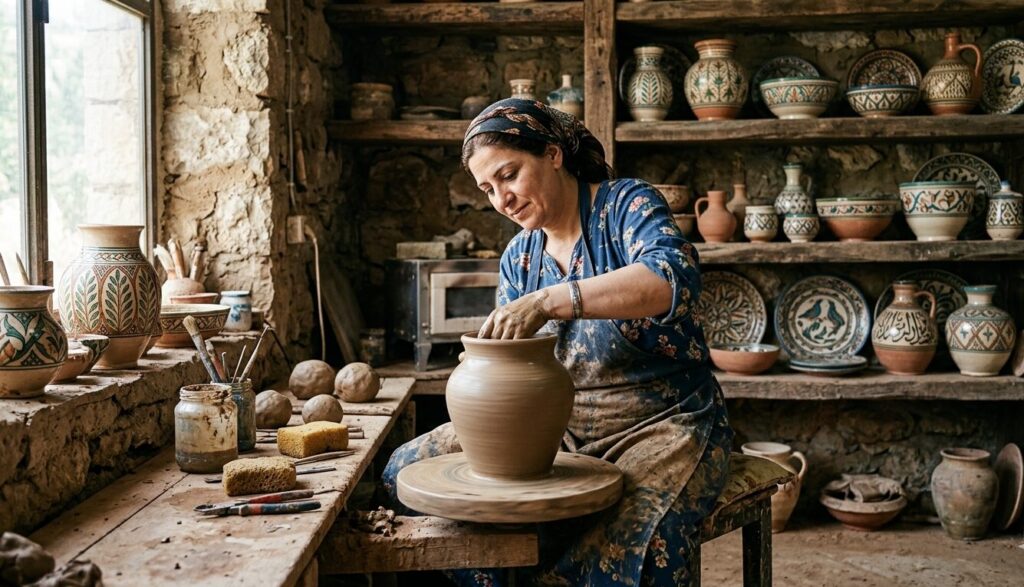
1. Artisanal Ceramics: Earthy Lebanese Handmade Decor for Tables & Walls
The villages of Rachaya Al-Wadi and Bcharre are renowned for their unique glazing techniques using natural pigments. Unlike industrial tiles, each plate and vase embraces slight irregularities that make your table setting feel curated. The famous “four seasons” motifs — olive tree, cedar, poppy, and grapevine — are painted with a steady hand. For an interior that breathes the Mediterranean, pair ceramic salad bowls with Levant dining room style 2026 linens. Durable and food-safe, these pieces honor a 7,000-year-old pottery lineage.
Where to find: Beit Jabal, Souk El Tayeb’s artisan collective, or online via LibanPost’s craft initiative. Prices start at $15 for a hand-painted espresso cup. Every purchase keeps young potters employed in rural cooperatives.
2. Lebanese Blown Glass: Translucent Wonders from Sarafand
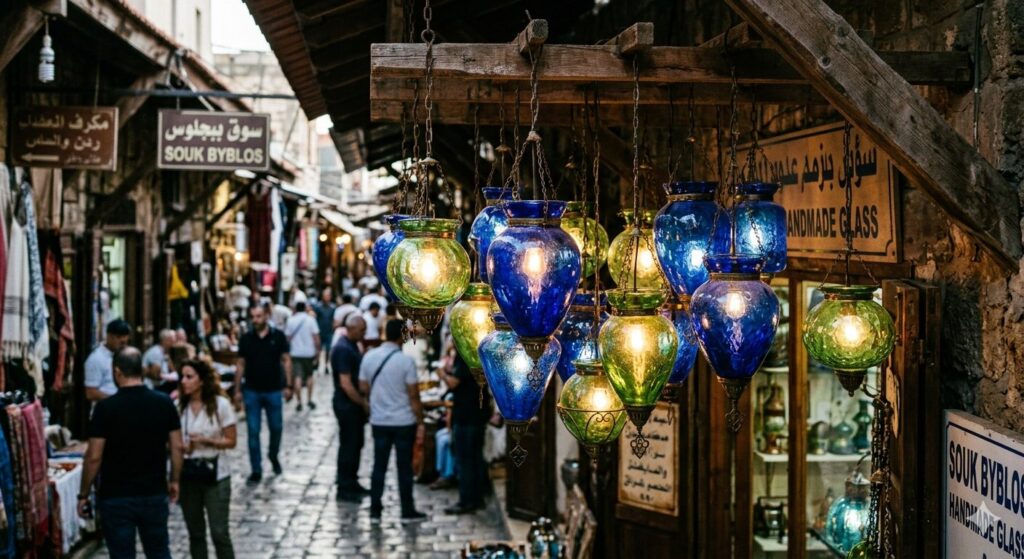
Few things capture light like traditional blown glass from the coast between Sidon and Tyre. This Lebanese handmade decor staple comes in jeweler blues, sea greens, and amber tones. Each lamp, vase, or drinking glass is shaped by breath and fire, using recycled glass and centuries-old molds. Due to industrial pressure, only three workshops remain, but they produce some of the most sublime decor objects. Hang a set of Sarafand glass lanterns on your balcony to recreate a Lebanese balcony styling small Beirut vibe, with shadows dancing like oud melodies.
Support tip: Follow “Zakaria Glass” on Instagram — they ship worldwide and host virtual blowing sessions. Invest in a glass carafe; it doubles as a sculptural centerpiece.
3. Woven Traditions: Kilims, Pillows & Tent Weaves as Lebanese Handmade Decor
Nomadic and village weavings from the Bekaa plain and Akkar region produce some of the most versatile Lebanese handmade decor. Using hand-spun sheep wool and wild plant dyes (madder root, walnut hull, indigo), weavers create geometric runners, flatweave kilims, and cozy throw blankets. Their patterns often symbolize protection against the evil eye or represent family ancestry. Drape one over a sofa in a contemporary chalet in Faraya for instant hygge warmth. Many weavers now offer custom cushions that mix traditional “qarqaf” patterns with modern neutrals, perfect for minimalist interiors that crave a heritage accent.
Ethical link: “Artisans of Lebanon” cooperative ensures fair wages. A 140x200cm rug costs around $180 — a steal for heirloom quality.
4. Cedar Wood & Mother-of-Pearl Inlay: Iconic Lebanese Handmade Decor Since Phoenician Times
Cedar wood, the symbol of eternity, when combined with nacre (mother-of-pearl) creates furniture and decorative objects that feel both royal and earthy. Small inlaid boxes, chessboards, mirror frames, and wall shelves are modern favorites. This craft is concentrated in Jdeideh and Zouk Mosbeh, where young apprentices learn to cut geometric patterns into fragrant cedar before inserting iridescent shell pieces. Place an inlaid box on your console to store jewelry or keys — it becomes a conversation starter. The wood’s natural oils repel insects, making it as functional as it is beautiful. For more on Lebanon’s emblematic tree, read our deep dive on cedar scent: Lebanese wood sensory decor.
Pro tip: Ask for “Fadi’s Workshop” in Byblos old souk; they engrave names or dates for weddings. A medium jewelry box costs $45.
5. Handcrafted Soap from Tripoli: Sculptural & Scented Lebanese Handmade Decor
While soap is utilitarian, traditional laurel and olive oil soap blocks from Tripoli’s ancient soap khan (Khan el Saboun) are stacked into decorative pyramids in modern bathrooms. Their greenish-brown cubes, stamped with artisan marks, bring a rustic, mineral elegance to any shelf. Arrange three or five blocks on a wooden tray next to a folded towel for an instant spa aesthetic. Many ateliers now produce limited-edition soaps scented with jasmine, orange blossom, or cedar. This edible-looking Lebanese handmade decor trend delights minimalists and maximalists alike. Plus, it’s zero-waste — once the soap dissolves, the packaging is paper. Combine them with Roman baths modern spa elements to evoke hammam serenity.
Support: “Nablus Soap” (Palestinian-Lebanese family workshop) + “Sabouna” deliver globally. A set of 6 blocks = $28.
6. Hammered Copper & Brass Trays: Gleaming Lebanese Handmade Decor from Hamra’s Artisans
No Eastern-inspired interior is complete without a hammered brass tray or copper coffee pot. The district of Hamra (Beirut) and villages like Zahle still house metalsmiths who hand-engrave verses, geometric stars, and vine motifs. These trays serve as wall art, fruit displays, or even as a base for a large candle arrangement. The patina that develops over time makes each piece more charming. For a dramatic look, hang a massive engraved brass plate above your sideboard, complementing the palatial flooring Lebanese marble mosaic in your hallway. With increasing global demand, new artisans revive the craft with modern silhouettes — think oblong trays and minimalist coasters.
Where to order: “Orient 510” or “Artisanal Beirut” online store. A serving tray (40cm) costs $65–120 depending on intricacy.
Where to Ethically Buy Lebanese Handmade Decor (Direct from Artisans)
Online platforms: “Syrian & Lebanese Craft Network” (follow links with no intermediary markup), “From Lebanon with Love” (shipping worldwide), and Etsy’s “LebaneseHandmade” collective. In-person: When tourism restores its full bloom, visit the Sunday flea market at Beirut’s Hippodrome or the permanent artisan village in Batroun. Always ask for the artisan’s name — many will sign the piece or share a photo of their workshop.
Fair trade certification: Look for the “Mouneh & Crafts” label from the Lebanese Ministry of Tourism. It guarantees that your purchase of Lebanese handmade decor directly supports families and preserves endangered skills. Also, many decor pieces come with a COA (certificate of authenticity) describing the village and technique used.
In a world shifting to fast furniture, choosing Lebanese handmade decor is an act of resistance — a celebration of the imperfect, the human-scaled, and the timelessly beautiful. Each time you light a candle in a blown glass holder or lay a handwoven runner on your table, you echo the spirit of Phenicia, the rhythm of the souk, and the warmth of a family kitchen. Your home becomes a gallery of stories, and more importantly, you help ensure that these crafts survive for the next generation of travelers and design lovers.
Make your next purchase count. Start small: a ceramic olive dish, a cedar bookmark, or a pair of brass bookends. Then watch how your environment transforms into a sanctuary of Levantine soul.
📚 For more on preserving craft heritage, read the report by UNESCO’s Intangible Heritage: Lebanese Weaving and the artisan stories published by The Daily Star Lebanon .