
The Soap Museum of Sidon is not merely a repository of olive-oil based artifacts. Housed inside a majestic 17th-century Ottoman soap factory, this landmark in southern Lebanon transforms industrial heritage into an immersive decor and tourism experience. Every stone vault, every weathered wooden press, and every shaft of light filtering through star-shaped apertures whispers the legacy of a craftsmanship that shaped Mediterranean trade. For travelers and design lovers alike, the Soap Museum of Sidon offers a rare lesson: architecture can preserve not only objects but also the very soul of an industry. Step inside, and you walk through centuries of extraction, tradition, and resilient beauty.
📖 Table of Contents
- 1. Architectural Narrative: When Industry Meets Aesthetic
- 2. Ottoman Engineering & Lebanese Limestone Synergy
- 3. Sensory Decor: The Color & Texture of Soap-Making
- 4. The Seven Vaults: Acoustics and Airflow as Design
- 5. Tourism Booster: How a Soap Museum Revived Sidon
- 6. Adaptive Reuse Lessons for Modern Interiors
- 7. Visitor’s Guide: Decor & Travel Itinerary
1. Architectural Narrative: When Industry Meets Aesthetic
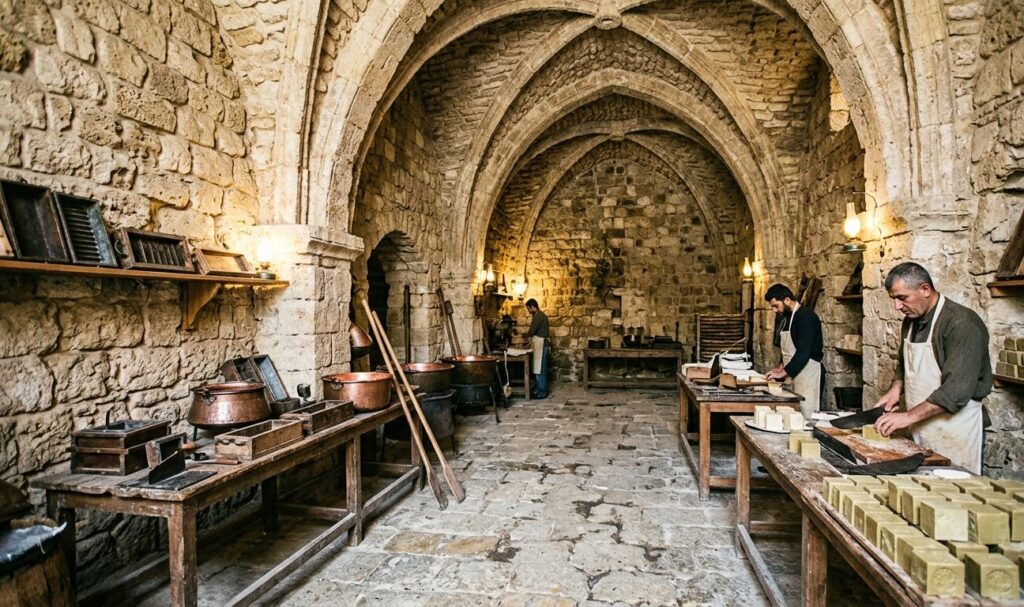
Walking through the thick walls of the Soap Museum of Sidon, you feel an immediate shift in atmosphere. The building, originally a “masbane” (soap factory), was erected during the Ottoman era using local limestone blocks and basalt columns. The narrative is not written on plaques alone — it is carved into the raw materiality. Instead of dry museum vitrines, the architecture itself demonstrates the journey: from raw olive oil harvested from surrounding groves to the final curing stage inside stone silos. This is a place where industrial heritage storytelling becomes a tangible decor principle: dark, cool corridors contrast with bright courtyards, mimicking the functional needs of soap curing. Each arch and doorway once directed labor, smoke, and commerce. Today, those same portals guide curious travelers through layers of Levantine ingenuity.
2. Ottoman Engineering & Lebanese Limestone Synergy
Few realize that the Soap Museum of Sidon relies heavily on a material deeply rooted in Lebanese architecture: creamy, porous limestone. The same stone that shapes Beiteddine Palace and Sursock Museum holds the walls of this soap factory. The high thermal mass keeps interiors at an even temperature — a crucial factor for soap saponification. The synergy between Ottoman engineering (massive cross-vaults, pointed arches, and central skylights) and Lebanese limestone craftsmanship results in a masterpiece of passive industrial design. For decor enthusiasts, this evokes ideas for modern homes: natural stone absorbs humidity and regulates temperature, while bare plaster finishes echo authenticity. Explore the full potential of Levantine stone in Lebanese decor to understand how this material bridges tradition and contemporary style.
3. Sensory Decor: The Color & Texture of Soap-Making
Unlike conventional museums, the Soap Museum of Sidon engages all senses. The smell of laurel and olive oil still clings to the old cauldrons. The patina on copper vessels, the grain of aged cedar stirring paddles, and the rough-hewn rock-cut vats create a palette of earthy greens, ochre, and charcoal. This sensory interior design teaches tourists and decorators a vital lesson: authentic patina is irreplaceable. Designers can replicate the look by using lime-washed walls, raw linen, and exposed wooden beams. The museum’s curatorial choice — minimal signage, maximal texture — turns every corner into a still life. In tourism terms, it’s an Instagram dream that remains solemn and respectful. It’s exactly why the Soap Museum of Sidon has become a mandatory stop for cultural visitors to South Lebanon.
4. The Seven Vaults: Acoustics and Airflow as Design
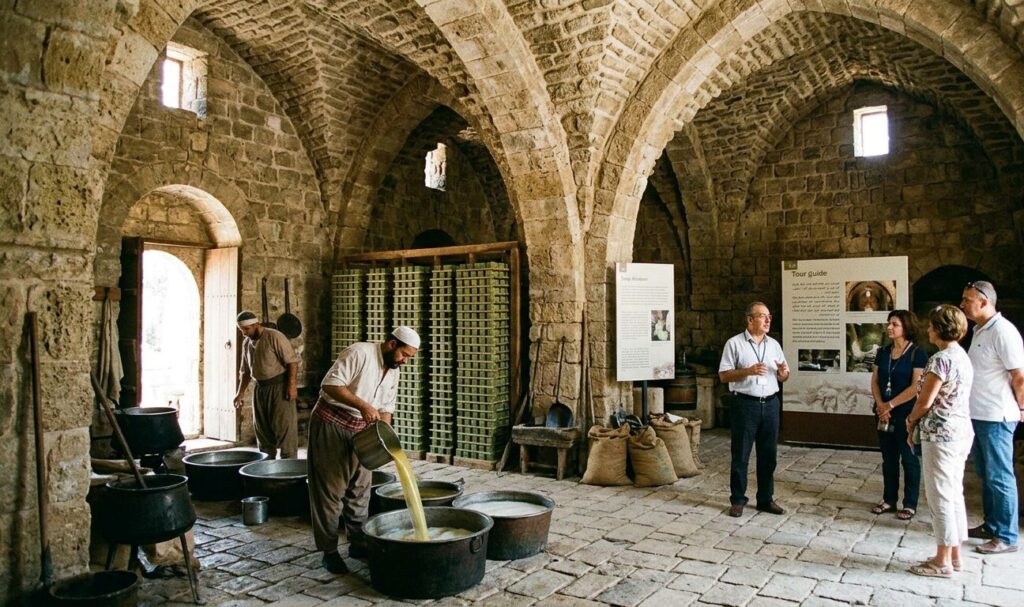
One of the most astonishing architectural elements inside the Soap Museum of Sidon is the series of seven transverse vaults. Each vault (roughly 8 meters long) ends with a wind tower element that channels sea breezes. This pre-industrial HVAC system kept the soap-drying process stable. For decor aficionados, this is a sublime example of functional ornament: the ribbed vaults also create dramatic acoustic reverb, giving guided walking tours an almost sacred resonance. Modern open-plan homes can incorporate barrel-vaulted ceilings or fabric canopies to improve both aesthetics and airflow. The museum reminds us that architecture telling the story of an industry goes beyond visuals — it includes sound, thermal comfort, and air movement. Sidon’s master builders knew that good design serves a process.
5. Tourism Booster: How a Soap Museum Revived Sidon
As a tourism specialist for Famous Landmarks, I cannot overstate the economic and cultural impact of the Soap Museum of Sidon. Before its restoration (completed by the Austrian Arab Technical Institute and local foundations), the old soap factory was a crumbling ruin. Today, it attracts over 70,000 visitors annually, making it one of Lebanon’s top heritage attractions. The museum includes a boutique selling natural soaps, a small cafe within a repurposed water cistern, and rotating exhibits on Phoenician trade routes. The ripple effect on local hostels, restaurants, and artisan workshops has been transformative. For Lebanon tourism strategy, this model proves that niche industrial museums drive sustainable tourism. The focus keyword naturally weaves through every tour guide’s speech: “The Soap Museum of Sidon is where our ancestors turned olive oil into gold.”
Sidon Sea Castle Geometry •
Adaptive Reuse in Mar Mikhael •
Beiteddine Palace Decor Lessons
6. Adaptive Reuse Lessons for Modern Interiors
One of the most powerful takeaways from the Soap Museum of Sidon is its masterful adaptive reuse. No space feels over-designed. Original soap-cutting tables have become exhibition pedestals; an ancient well is now a light installation. This philosophy resonates with interior designers seeking low-waste, high-character decor. Instead of erasing history, highlight industrial remnants: leave brick exposed, integrate metal rails as shelving brackets, or install a salvaged olive press as a dining table base. The museum’s approach aligns perfectly with contemporary trends like wabi-sabi and brutalism meets warmth. In fact, the museum’s gift shop sells booklets on “how to repurpose heritage elements” — a must-read for anyone renovating old buildings. For a deeper dive on reviving historic structures, check out our feature on adaptive reuse in Mar Mikhael.
7. Visitor’s Guide: Decor & Travel Itinerary
Planning to experience the Soap Museum of Sidon firsthand? The museum is located in the old city of Sidon (Saida), just a 10-minute walk from the Sea Castle and the historic souks. Opening hours: 9 AM – 6 PM (closed Mondays). Entrance fee: 5 USD, including a small tasting of local olive oil soap. Photography is encouraged, so bring a wide-angle lens to capture the dramatic vaults. Adjacent to the museum is a restored Ottoman house turned into a concept store selling organic soaps, handmade pottery, and linen. Combine your visit with a walk through the Sidon souks, where you can still see traditional soap merchants. For decor lovers, the museum offers seasonal workshops on “Natural Pigments and Plaster Finishes” — an absolute gem. Combine this with a tour of Ottoman influence in Beirut high ceilings to understand the broader design language.
UNESCO Tentative List – Rachid Karami Museum
Lebanon Tourism Official
Archnet: Sidon Soap Museum Architectural Study
Final thoughts: The Soap Museum of Sidon stands as a testament to how architecture tells the story of an industry without uttering a single word. From Ottoman ventilation shafts to modern tourism revitalization, it offers parallel lessons for decorators and travelers: value authenticity, celebrate material honesty, and never underestimate the power of adaptive reuse. Lebanon’s landscape is dotted with such treasures, but few fuse heritage and aesthetic as seamlessly as this vaulted sanctuary by the sea. Make sure to add it to your travel bucket list — and bring back more than just soap; bring back design inspiration that lasts lifetimes.