
✨ Designer’s Capital — not a title claimed loudly, but whispered through elegant courtyards, hand-carved limestone, and the subtle geometry of arched windows. Deir el Qamar, nestled in the Chouf mountains, is Lebanon’s hidden muse for decor lovers and tourism insiders. Step inside the village that transformed rural authenticity into high-design pilgrimage.
📖 Contents of the Designer’s Journey
🏛️ Why Deir el Qamar is the “Designer’s Capital” of the mountains
When design aficionados travel through Mount Lebanon, they often miss the quiet revolution happening in Deir el Qamar. This village—with its perfectly preserved 16th-century layout—is the Designer’s Capital not because of flashy boutiques, but because every alley teaches proportion, light, and tactile materiality. The local decor language is pure: raw stone, sensual wood, and the silence of central fountains. For those curating hotels, villas, or even editorial photoshoots, Deir el Qamar offers an unmatched masterclass. Tourism boards now label it “the medina of mountain aesthetics,” and Designer’s Capital resonates with architects seeking authentic references.
Unlike hyper-commercial hubs, this village never abandoned its craft heritage. Walking through the main square, you encounter the Museum of Folk Traditions and the Palace of Fakhreddine II, where Venetian-meets-Ottoman decorative motifs still inform contemporary Lebanese interiors. Each threshold becomes an inspiration board. For decor editors, Deir el Qamar is the ultimate source of “rustic nobility” — a trend that dominates 2026’s tourism & hospitality design. That’s why we declare, without doubt: it is the Designer’s Capital of the mountains.
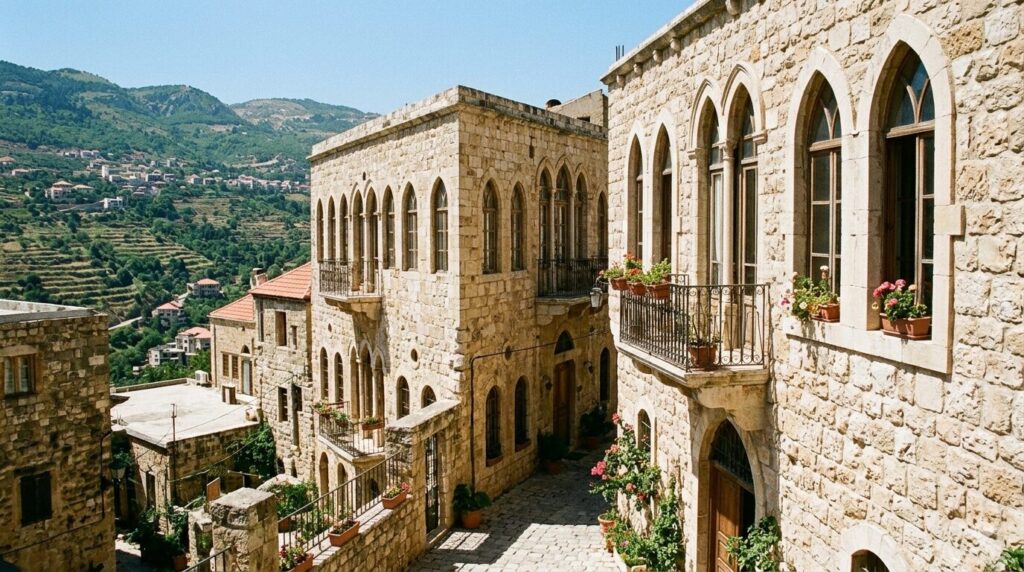
The Stone Signature: Levantine Limestone & Courtyard Harmony
Deir el Qamar’s architecture relies on an ancient technique: finely chiseled limestone blocks assembled without dominating mortar. This technique, known locally as “Rasas” masonry, creates a monolithic aesthetic that modern decor brands are now imitating. In fact, the village sits like a geological poem. No wonder that Designer’s Capital status is confirmed by the consistency of materials — every building tells the same story of dignity. The courtyards incorporate triple-arch elevations and cool shaded loggias, perfect for mountain resort layouts. For tourism development, adopting these passive cooling strategies aligns with eco-chic trends, and Deir el Qamar proves it works for centuries.
When you consider interior design of mountain retreats, nothing compares to the textural richness of aged limestone paired with cedar beams. The famous Levantine stone from Lebanese quarries remains the backbone of authentic mountain decor. Designers who travel to Deir el Qamar come back with sketchbooks full of window-to-wall ratios, revealed stone niches, and floor patterns derived from Roman motifs. The village’s binding secret: restraint. And restraint, my friends, is the highest form of design intelligence.
🪞 Interior Lessons from the Palace of Fakhreddine
At the heart of the village stands a masterpiece: the early 17th-century palace of Emir Fakhreddine II, a true lab of sensory decor. The palace’s reception rooms feature painted wooden ceilings, Italian-influenced window shutters, and marble floors arranged in geometric medallions. Any decor curator would immediately notice how light filters through multi-foil arches — a signature that the Designer’s Capital preserves religiously. Today, furniture designers extract these patterns for headboards, room dividers, and outdoor pavilions. The harmony between the built and natural environment echoes what we see in top-tier boutique hotels from Mykonos to Marrakech.
For tourism promoters, the palace demonstrates how adaptive reuse can create a living museum without Disneyfication. Restoration efforts have kept the patina of time, a favourite motif for modern decor lovers. Visiting Deir el Qamar gives you a master’s degree in “weathered elegance.” In fact, top Lebanese interior architects source ideas here before designing mountain chalets or even urban lofts. The Designer’s Capital is not a slogan; it’s a studied reality. One walk through the souk area (still active with pottery and textile weavers) validates the authenticity that luxury travellers crave.
If you need deeper research on Chouf region’s design heritage, check this archive of traditional Lebanese mountain architecture — a trusted external source that echoes the village’s legacy.
🧭 Tourism & Design Walk: Where Creativity Meets Hospitality
A slow tourism movement is growing: the “Design Walk” of Deir el Qamar. Visitors follow nine landmark stops — from the central fountain “Nabea” to the 15th-century mosque-museum, from restored khans to artisan cooperatives. The walk lasts 90 minutes but inspires months of interior projects. For travel magazines like ours, this village is a case study: how small-scale heritage can drive luxury experiential travel. And yes, Designer’s Capital fits perfectly because the region offers residential workshops on ‘Stone Setting’ and ‘Mother-of-Pearl Inlay.’ Those workshops attract designers from Dubai, Paris, and Milan. Tourism Lebanon now uses Deir el Qamar as the flagship for ‘slow design’ retreats.
Interior decor takeaways? Use raw linen, unpolished brass, and locally carved wooden panels. The colours of Deir el Qamar: terracotta, sage green, and warm off-white. The palette is a decorator’s dream. Moreover, the village perfected the art of outdoor rooms—terraces that seem to float over valleys. This becomes crucial for contemporary chalets or hospitality concepts that blend indoor/outdoor flow. Famous Landmarks magazine highly recommends that any designer curating a mountain space should dedicate 48 hours to simply absorb the village’s spacing rhythm. It completely replaces conventional mood boards.
🌟 Why the Designer’s Capital of mountains inspires modern chalets
Contemporary architects designing contemporary chalets in Faraya or boutique resorts in Bkassine often travel 45 minutes to Deir el Qamar. Why? Because the village solves the problem of “mountain modernity”—how to integrate large glass facades without losing heritage soul. The answer lies in massing, arch repetition, and shaded terraces. The Designer’s Capital is a living laboratory for resort aesthetics. Even the municipal lighting plan respects the stone’s warm tonality, elevating nighttime ambience for tourism. For decor-focused entrepreneurs, Deir el Qamar provides <a href=”<a href=”https://www.famouslandmarks.art/<a href=”Grand Scale Mirrors: Incorporating Deir El Qamar Baroque Frames in Lounges”>grand-canyon-color-palette/” class=”flap-internal-link” rel=”internal”><a href=”15 Spectacular Grand Canyon Color Palette Combos for Cozy Desert Living”>15 Spectacular Grand Canyon Color Palette Combos for Cozy Desert Living”>15+ examples of restored residences turned into B&Bs, each showcasing different eras but the same DNA: austere elegance.
Moreover, the 2026 tourism trend is “emotional geography” — places that evoke calm and belonging. Deir el Qamar triggers that instantly. The village earned recognition from the World Tourism Organization for its cultural routes. For decor, this translates into textures that speak of permanence. We recommend that every hotelier sourcing ‘mountain-minimalist’ references uses the keyword Designer’s Capital in their mood board. It’s a compact term that encapsulates authenticity, craftsmanship, and visual balance. In coming years, expect design weeks hosted here, drawing global curators. The foundations are already set.
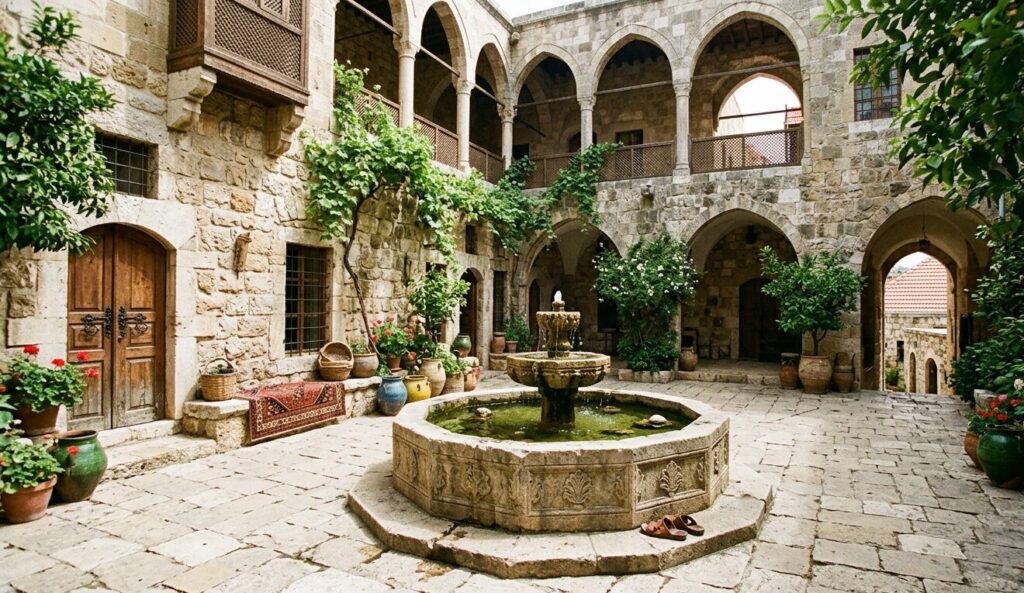
One more internal gem: if you are fascinated by how ancient floor patterns influence today’s luxury bathrooms, read our deep dive on Palatial flooring with Lebanese marble mosaic — directly tied to the village’s decorative heritage. The same mosaic technique appears in Deir el Qamar’s churches and noble homes. This is the kind of continuity that classifies a locale as a genuine capital for designers.
And don’t miss the nearby architectural cousin, Beiteddine Palace decor lessons, just 15 minutes away, which complements Deir el Qamar’s residential domesticity. Together they form the duo of Lebanese ornamental genius. The Designer’s Capital therefore stands as the everyday, livable masterpiece, while palaces represent the ceremonial.